
Get Rooted: A Farmers Market Guide to Root Vegetables
December 2, 2025

A visit to the Ferry Plaza Farmers Market in February dispels the idea that there are no fresh vegetables during the winter. You’ll find baskets brimming with ruby red beets, colorful carrots, and plump turnips. These hardy root vegetables can stay fresh for winter months, and keep us well nourished through many cold and rainy days and nights.
Botanically, the term “root vegetable” refers to the edible taproots and tuberous roots of plants (like beets and carrots), but culinarily it can also refer to underground plant stems and structures such as tubers (potatoes, yams), corms (taro, water chestnut), and sometimes even rhizomes (turmeric, ginger). Roots store energy for plants in the form of carbohydrates and vary in their content of starches and sugars, which can make them sweet, especially when cooked.
Some people may resist root vegetables, associating them with long-cooking stews or bland side dishes, but preparing them doesn’t have to be painstaking, and a well-cooked root vegetable can be a revelation.
Though not a definitive list, here are some of the delicious root vegetables from the farmers market you can enjoy in the winter months. Click on the links below for more about specific varieties, growers, and recipes.
Visit These Farms at Foodwise Farmers Markets for Roots
Dirty Girl Produce | Eatwell Farm | Everything Under the Sun | Four Sisters Farm | GG Farm | Green Thumb Farms | Heirloom Gardens | Knoll Farms | Lonely Mountain Farm | Marin Roots Farm | McGinnis Ranch | Oya Organics | Star Route Farms | Tierra Vegetables | Ventura Organic Farms | Zuckerman’s Farm

Beets (Chenopodiaceae)
Typically red and globe-shaped, beets can also be found in white, golden, and Chioggia (candy cane) varieties. Beets have the highest sugar content of any vegetable, but are low in calories. It’s best not to peel before cooking. Be aware that red beets can stain your hands and clothing. Roast them, and add wedges to salads along with goat cheese; toss with herb butter; make into borscht, a hearty Eastern European soup.
Recipe to try: Pickled Beet and Braised Beet Top Salad by Ben Paula, Sauce

Carrots (Apiaceae)
At the farmers market, carrots are not just available in orange, but also shades of red, purple, and gold. They’re high in beta-carotene, which is converted in the body to vitamin A. Store carrots away from apples or pears because they release ethylene gas, which can turn carrots bitter. Carrots are commonly used for both savory and sweet dishes. Shred raw carrots and mix with olive oil, lemon juice, and rosemary to make a salad. Add carrots to beef stew, tomato sauce, vegetable soup, or stir-fries. Make carrot cake, carrot torte, or carrot pudding.
Recipe to try: Charred Carrots with Gochujang Honey Butter by Peter Som, Family Style
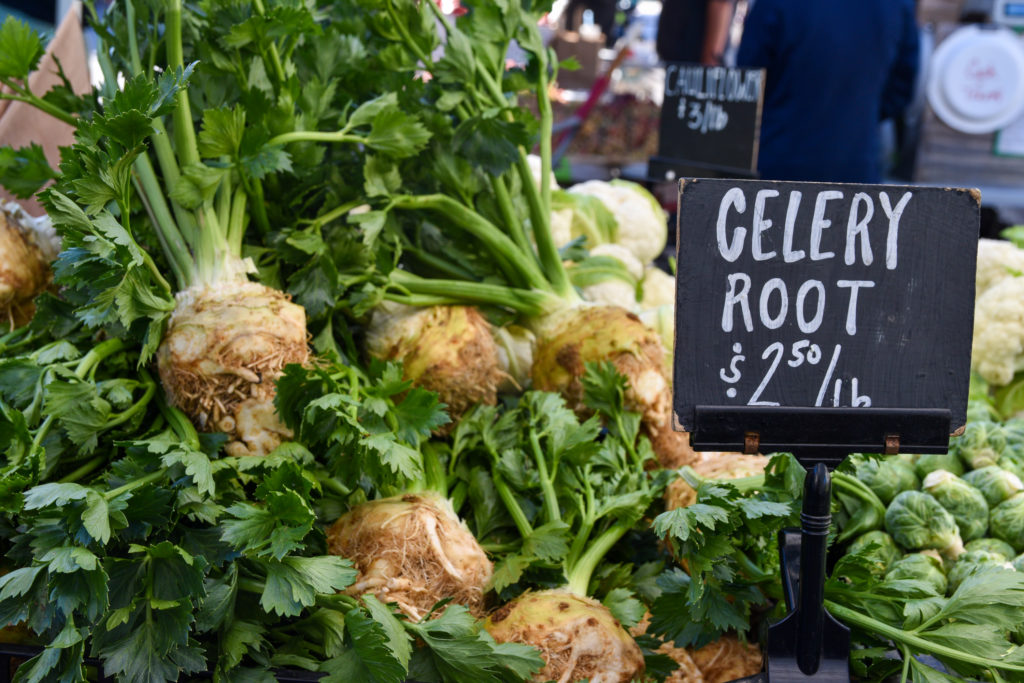
Celery root (Apiaceae)
Also known as celeriac, this is a special variety of celery cultivated for it’s softball-sized root, rather than its stalks, with a thick, wrinkly brown skin. The flavor is like a cross between parsley and mild celery. Keep pieces in acidulated water after peeling so that they don’t brown. Mash or purée with potatoes; add to beef stew. A classic French preparation is raw with rémoulade sauce (mayonnaise, capers, gherkins, anchovies, mustard).
Recipe to try: Root Vegetable Tagine by Naomi Webb, Foodwise Staff

Daikon (Brassicaceae)
Native to Asia, this long, dense cucumber-shaped root is also known as white radish or mooli. The name “daikon” comes from the Japanese words for “dai” (meaning large) and “kon” (meaning root). It is often included in stir-fries or pickled, as in Korean kimchi. Steam daikon with shredded carrots, then dress with vinaigrette made with rice wine vinegar, sesame oil, and chopped cilantro.
Recipe to try: Napa Cabbage Kimchi by Aruna Lee, Volcano Kimchi

Horseradish (Brassicaceae)
This long, knobby root is often known as a condiment. A hot, spicy bite develops when the root is grated or ground. Vinegar is used to stabilize this process; it loses flavor if it’s cooked. Horseradish is one of the “bitter herbs” used in the Jewish Seder supper. Add grated horseradish, salt, and lemon juice or vinegar to sour cream and serve with cold roast beef or vegetables. Make homemade cocktail sauce with ketchup or chili sauce and grated horseradish.
Recipe to try: Beet Salad by Darra Goldstein, Beyond the North Wind

Parsnips (Apiaceae)
These skinny beige roots resemble ivory-colored carrots, and are pleasantly sweet with earthy herbal notes. In ancient times, parsnips were used as a sweetener. Frost helps them develop their deep flavor. Boil them with potatoes and mash together. Or toss roasted parsnips with nutmeg, ginger, cinnamon, or allspice and a little brown sugar or maple syrup.
Recipe to try: Jerusalem Artichokes, Winter Roots, Smoked Salt by Nigel Slater, Greenfeast: Autumn, Winter

Potatoes (Solanaceae)
Potatoes are tubers, a structure in plants used to store nutrients. Although they get a bad rap by low-carb dieters, potatoes are full of fiber, vitamin C, B6, and potassium. At the farmers market, you can find these tubers in a variety of shapes, colors, and flavors. Because they can be stored through the winter, potatoes are a great, nutrient-rich source of complex carbohydrates, which provide more sustained energy when digested. Roast them, boil them, mash them, and add them to salads.
Recipe to try: Lefse (Potato Flatbread) by Nichole Accettola, Scandinavian from Scratch

Radishes (Brassicaceae)
Usually round but sometimes elongated, radishes are typically have a reddish skin with white interior, and a peppery bite. Watermelon radishes have greenish skins and bright magenta interiors. Radishes are typically eaten raw in salads, as an appetizer, or as a garnish. According to Alan Davidson in the Oxford Companion to Food, “Perhaps the most satisfactory way to eat them is to hold what is left of the green stalk between one’s fingers, rub the radish over a piece of butter, dip it in salt, and eat it with bread and butter.”
Recipe to try: Apple, Fennel, Celery, and Radish Salad with Handmade Ricotta by Daniel Corey, Luce
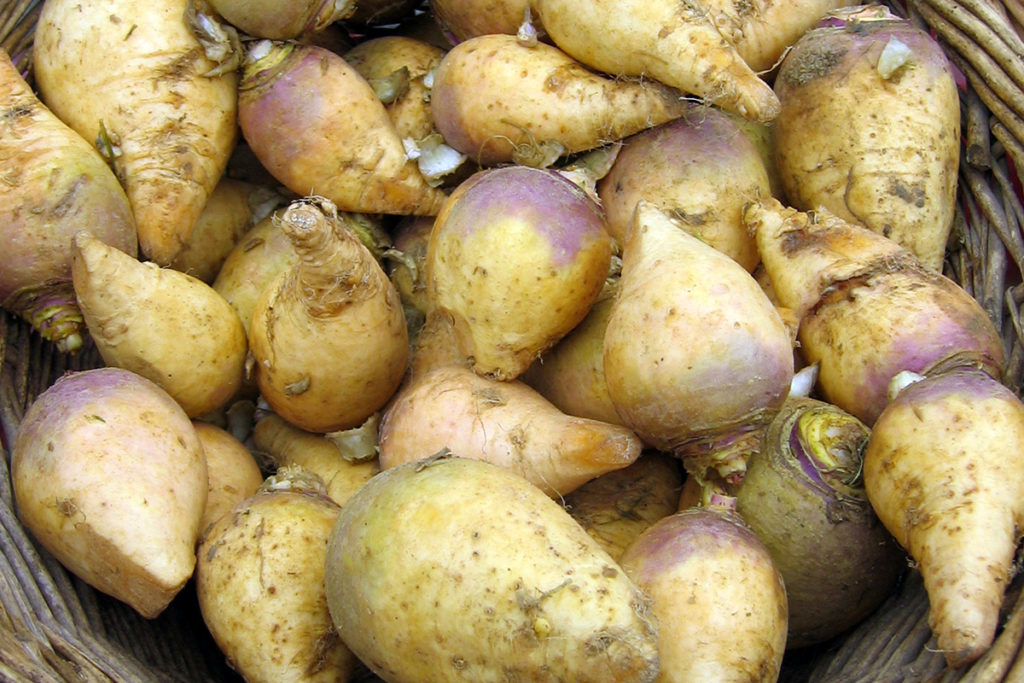
Rutabagas (Brassicaceae)
Usually yellow- or purple- fleshed and round, rutabagas were originally grown as feed for livestock. But once their sweet taste and nutritious properties were embraced, they began to be harvested for human consumption as well. Rutabagas are a hybrid cross between a cabbage and a turnip. Add diced rutabagas to chicken pot pie. Use julienned raw rutabagas on a crudités tray.
Receipe to try: Savory Root Vegetable Pancakes with Crème Fraîche by Lauren Kiino, Il Cane Rosso
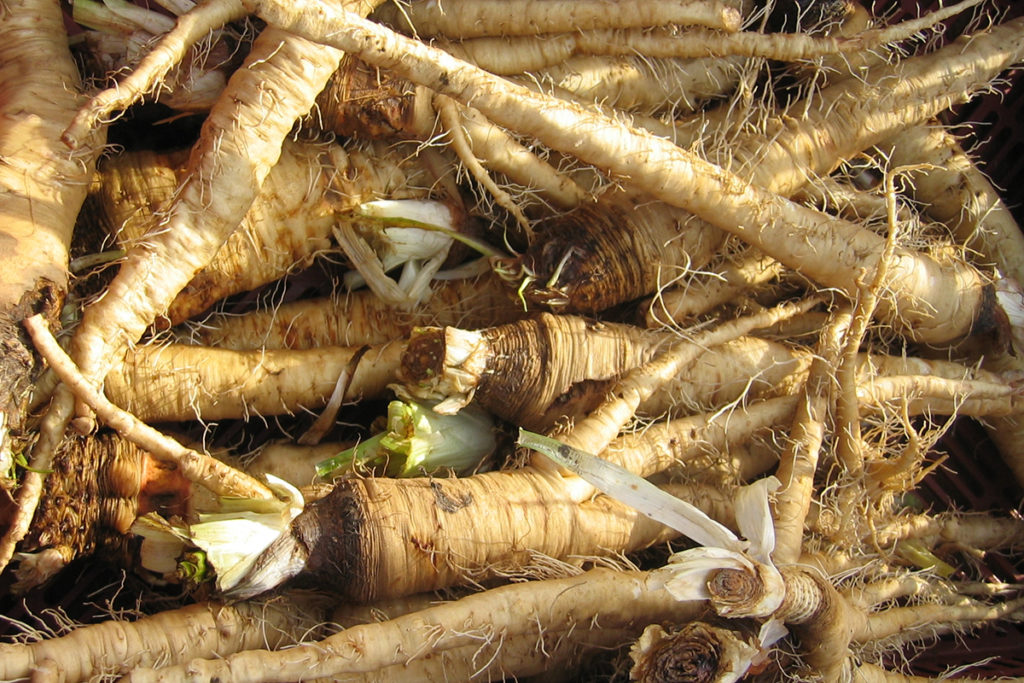
Salsify (Asteraceae)
This white carrot-like root is sometimes called “oyster plant”; the roots of the less common black salsify are brown on the outside. Delicate roots break easily and are difficult to harvest. It quickly goes from tender to mushy, so cook gently. Braise with chicken, onions, mushrooms, and stock. Mash with Parmigiano Reggiano, form into croquettes, and pan-fry.

Sunchokes (Asteraceae)
Also known as Jerusalem artichokes, sunchokes are tubers that native to North America. Their taste falls somewhere between an artichoke heart and a sunflower seed, with a crisp texture and nutty flavor. Of particular interest to people with diabetes, the insulin sunchokes contain breaks down into fructose instead of glucose during digestion. Chop them into salads, dips, salsa, chutney, or light marinades. Cook them with grilled poultry or fish, or soups, or sauces. Use in dishes as you might use jicama, water chestnuts, or almonds.
Recipe to try: Sunchoke Ravioli by Mark Dommen, One Market
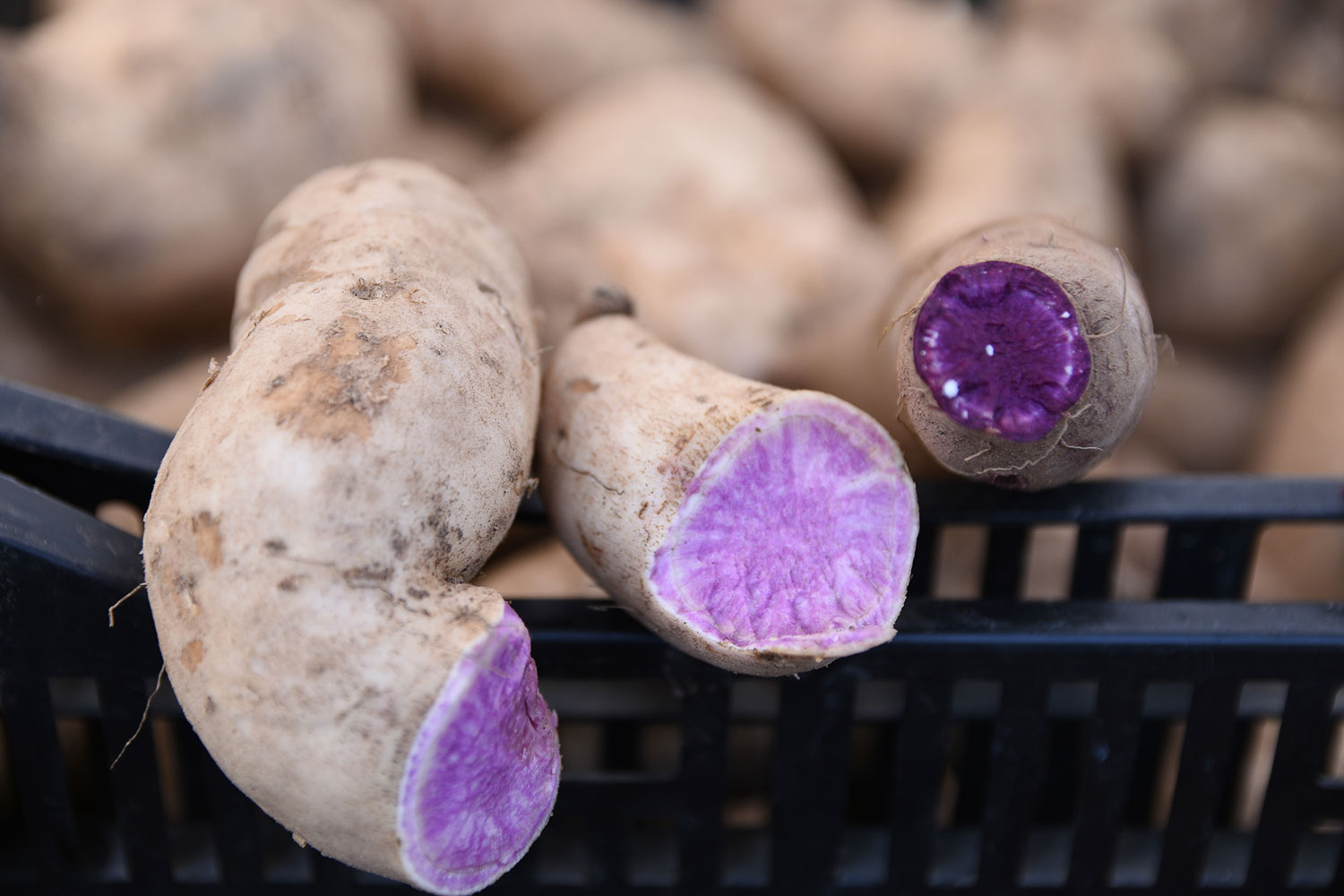
Sweet potatoes (Convolvulaceae)
Though are commonly called “yams” in the United States, sweet potatoes are neither true yams, which grow in tropical climates, nor potatoes. Sweet potatoes have been cultivated in the Americas for over 2,000 years. The orange-fleshed and squash-like (like Garnets) and pale-fleshed and fluffy when cooked (like Jersey Yellows) varieties of these tuberous roots are most well known, but dozens of varieties exist. Roast them or cut into sticks and fry like french fries. Mash and combine with crème fraîche and minced chipotles in adobo sauce.
Recipe to try: Collard Greens, Black Eyed Peas, and Sweet Potato Soup with Sweet Potato Cornbread by Wanda Blake, Wanda’s Cooking

Turnips (Brassicaceae)
Usually round and white with possibly a purple-tinged skin, turnips are often pickled in Japanese and Arab cuisines; in China, they are sun-dried and salted or preserved in soy sauce. Dress shredded raw turnips, cabbage, and carrots with sharp mustard vinaigrette and poppy seeds to make a slaw. Make a gratin of paper-thin turnip slices, cream, and Parmigiano Reggiano cheese.
Recipe to try: Turnip Soup with Pomegranate and Walnuts by Jake Des Voignes, Local: Mission Eatery
This article was updated and expanded from a previously published version written by intern Julia Allenby.
Topics: Culinary, Produce guides, Seasonal, Vegetables