
This Mission District Beekeeper Harvests Honey from Neighborhood Hives
Sheree Bishop, Communications Coordinator
July 17, 2026
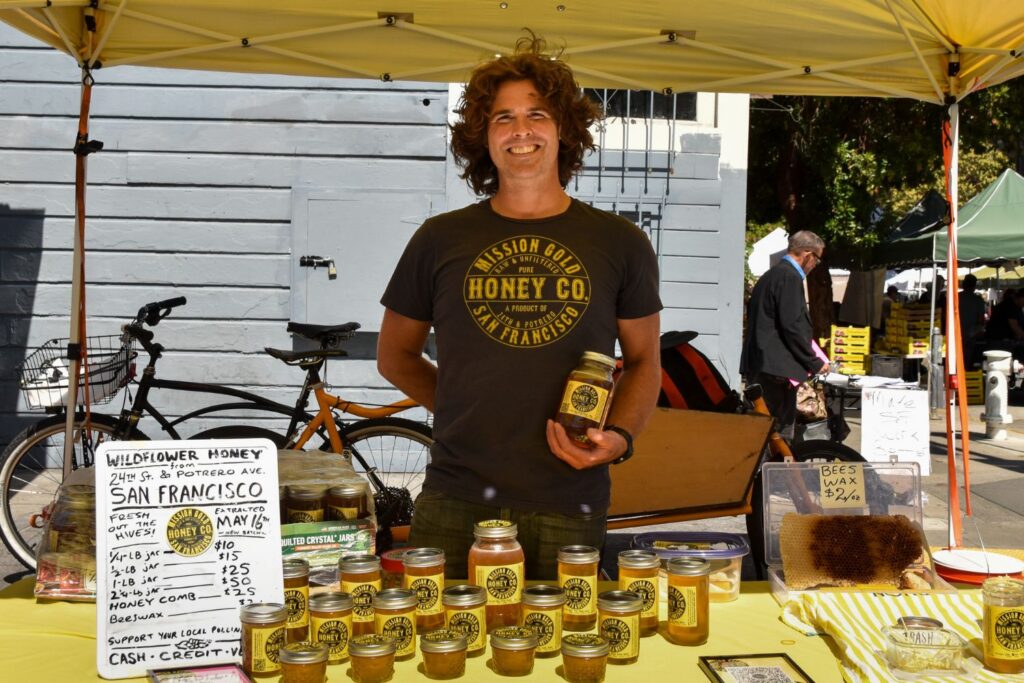
When you taste a sample of honey from Mission Gold Honey Company, you’re tasting the flavors of neighborhood gardens and native plants from all over the Mission District. With his bee-based business, San Francisco-born paramedic Sean Lavelle has turned a well-loved hobby into a delicious side hustle.
At the Mission Community Market on Thursdays, you can take home a jar of wildflower honey filled with flavor from hyper-local hives. “Everybody who has a garden in the Mission, they could have had a visit from my bees and their flowers, and the nectar from their flowers could be in that jar of honey,” Sean says.
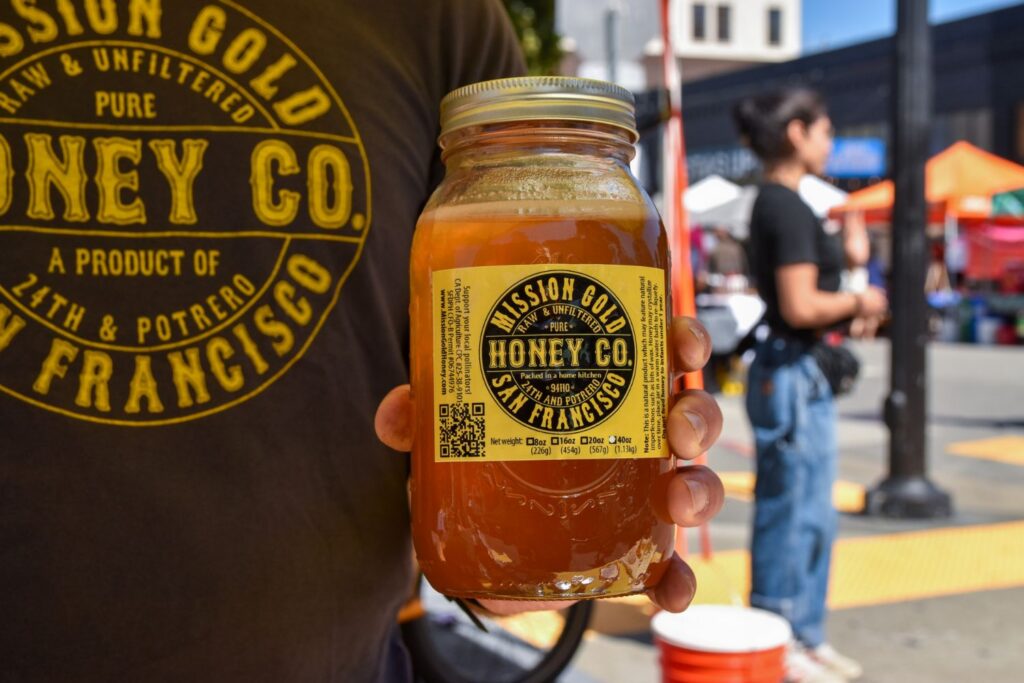
Commercial Honey vs. Neighborhood Wildflower Honey
Local wildflower honey differs from the commercial honey you find in most grocery stores in a number of ways. To cut costs, many commercial honey companies sell adulterated or diluted products, using corn syrup and other sugars that alter the chemical makeup of a jar of honey. These additives have been proven to cause health problems.
Beekeepers working for industrial agriculture companies often transport their bees great distances to pollinate orchards and farms that may spray pesticides, which can leave residues in their honey. The orchards and farms that these honey bees pollinate often only grow one kind of crop.
In contrast, Sean’s beehives are managed without pesticides or miticides, and the honey comes straight from the source. “Even if I’m not making a lot of money, it’s still a good excuse to put out a whole lot of pollinators into the world.”
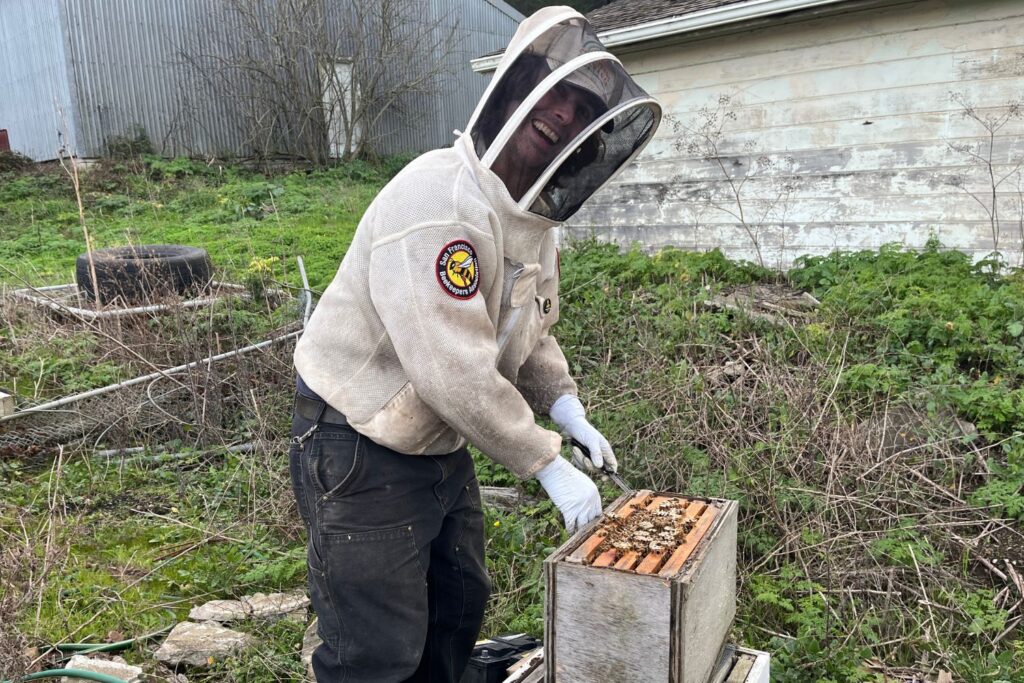
From a Casual Hobby to Managing Growing Hives
Sean had always been interested in organic gardening and growing native plants. For him, beekeeping grew naturally from that interest, and the extra honey was a welcome bonus.
Like many beekeepers, Sean received his first package bees in the spring, which gives worker bees more time to gather nectar, pollen, and other resources they would need to build their new hive.
“[The bees are] basically starting from scratch. They don’t have many resources, and it takes them a while to get up to speed. The very first year, my bees got up to speed really fast, and they showed signs that they were going to swarm,” Sean says.
Sean notes that it’s important to think of a bee colony as a living organism in itself. Swarming, in this context, is how bee colonies reproduce, splitting into two or more completely separate colonies. When swarms emerge, they often stay on a tree a few yards from their original hive before scout bees can find a permanent home. Swarms left unmanaged may build their new hives in undesirable places, such as inside hollow walls and in attics.
In Sean’s case, the bees decided to swarm at the edge of a rooftop. “I called the Beekeeper Association, and they didn’t want to help. They were like, ‘Oh, no, that’s too dangerous. You’re going to have to just let them go.’ And I didn’t like that answer,” Sean says.
He decided to modify a shop vacuum to safely move the bees into a beehive box. “I got off work. I was working a night shift. I put together this vacuum, and I vacuumed the bees off the roof, and it worked. I got all the bees and the queen in there. And all of a sudden, instead of one hive, I had three, just like that,” Sean says.
Over the span of a year, Sean came to care for multiple hives: first, several he moved to his own rooftop, then a few at the Potrero del Sol Community Garden, and a few more near Twin Peaks.
“It’s the sort of thing where you kind of get good at something and it just keeps getting bigger and bigger,” Sean says. “Eventually I ended up having so much honey I couldn’t keep it all for myself.”
Giving Back to the Community, One Sweet Jar at a Time
Sean first sold his honey at the Bernal Heights Earth Day Fair in 2024, after a fellow beekeeper invited him to vend there. A year later, in 2025, Sean created Mission Gold Honey Company, a formal business that also serves as a supportive side gig for him and for the local ecosystem.
The biggest challenge in establishing his honey business has been balancing it with his full-time job at a local hospital and the classes he teaches for EMTs and paramedic students at City College of San Francisco.
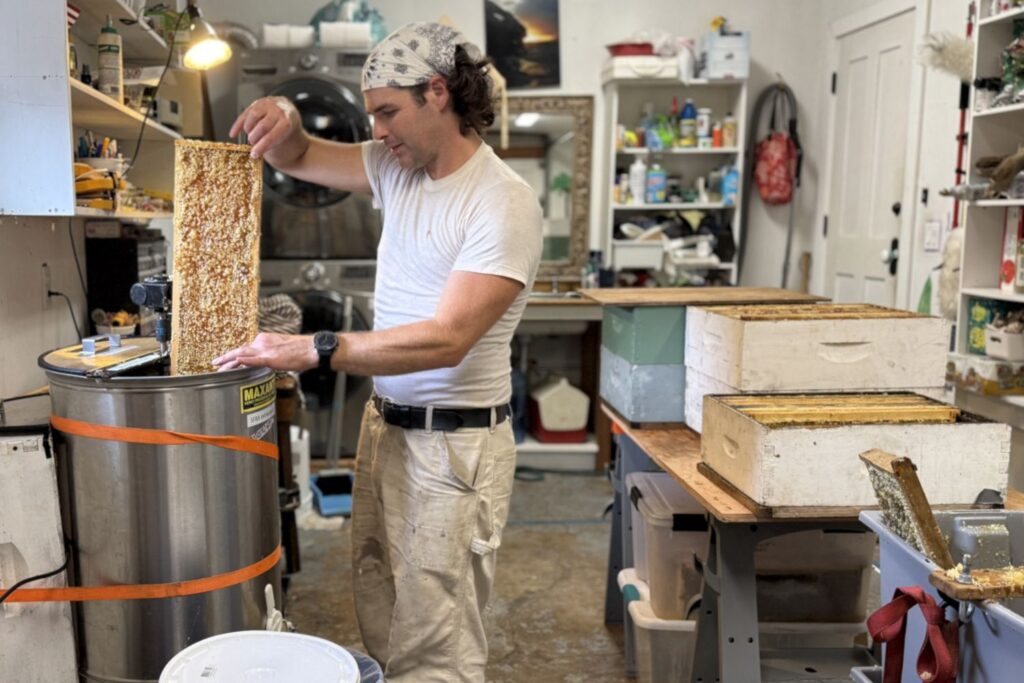
In addition to the people who help sell the honey at farmers markets in the Mission and in Pacifica, another person lets him use their garage for honey extraction, even though the process can be messy.
“I feel like the community has really stepped up and helped me out a lot. I’ve managed to find these people who are really stoked about bees and honey,” Sean says. “I’m managing something that seems to be getting a little bigger than myself, and the way that we figure that is through community and the help of people who like the mission of land stewardship and supporting our local pollinators.”
Along with the community of people who support his business, Sean is also grateful for the community of shoppers at the Mission Community Market. “I love being in the Mission Community Market. I’ve lived in the Mission for almost 20 years now. I’m so happy that I can be a part of that and sell this honey that really is a product of the community.”
Visit Mission Gold Honey Company every other Thursday at the Mission Community Market.
Topics: Farmers market, Pollinators