
Celebrating 50 Years of Legendary Fruit at Frog Hollow Farm
Sheree Bishop, Communications Coordinator
June 26, 2026
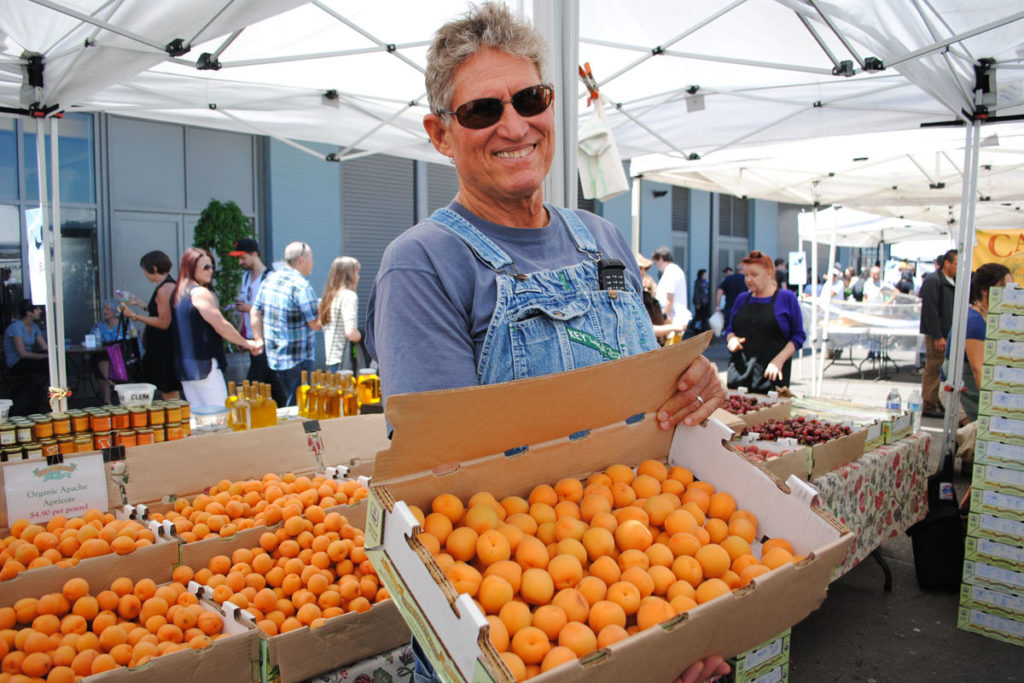
This year marks the 50th anniversary of Frog Hollow Farm, one of the Ferry Plaza Farmers Market’s founding farms. Since planting the first peach tree in 1976, Farmer Al Courchesne and the Frog Hollow team have grown from a one-man operation into a diversified farm with 265 acres of organic fruit orchards, a value-added business offering conserves and pastries, and an indelible legacy as one of the pioneers of the farm-to-table movement.
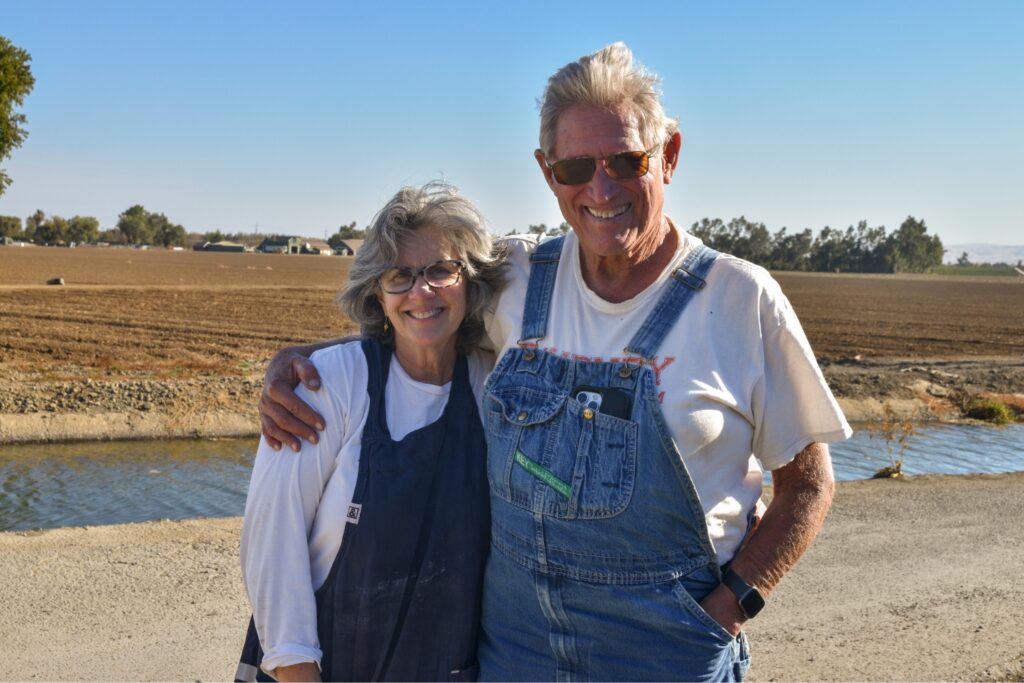
To celebrate this milestone, Al and his wife and partner, Becky, will join us at the Ferry Plaza for our Stone Fruit Celebration this Saturday, June 27. Read on to learn more about all that Frog Hollow Farm has accomplished in the last 50 years, and hear from the Courchesnes about the farm’s past, present, and future.
From Planting Peach Trees to Going Organic
Before moving to Brentwood, Al Courchesne tended a small vegetable farm on Oahu, Hawaii, where he also worked as a teacher. He eventually made the decision to begin farming full-time and, in the summer of 1975, he went to Brentwood to meet with several farmers in the area.
One of the farmers Al met gave him a particularly useful piece of advice. “They took me to this 13-acre parcel behind the cemetery and said, ‘You should buy this ground and plant peaches. You’ll make a lot of money.’ That was my inspiration to act and to actually purchase the 13 acres. I think I did that within a couple of days, and the next thing I knew, I was digging in the dirt with a shovel, planting trees.”
In early 1976, Frog Hollow Farm was established, and later in 1988, Al decided to transition the farm to organic certification. “I became organic because to me it seemed like the healthy thing to do: healthy for the people who were eating the food, healthy for the workers who were growing the food and handling it, picking it, and healthy for the soil,” Al says.
Frog Hollow Farm prioritizes regenerative organic farming, which restores soil health by limiting tillage, refusing to use synthetic pesticides, and using compost to feed their trees important nutrients while reducing food waste.
About 25 years ago, Frog Hollow Farm started making their own compost. Al considers their compost program to be one of the most important changes they made on the farm in the last 50 years.
“We used to apply three tons [of compost] per year because we had to buy it. Then, once we were making it ourselves, we were able to have better control of the quality of the compost, the ingredients that go into it, and we started using more of it,” Al says.
‘All Food Should Taste this Good!’: Growing Up in the Farmers Market Movement
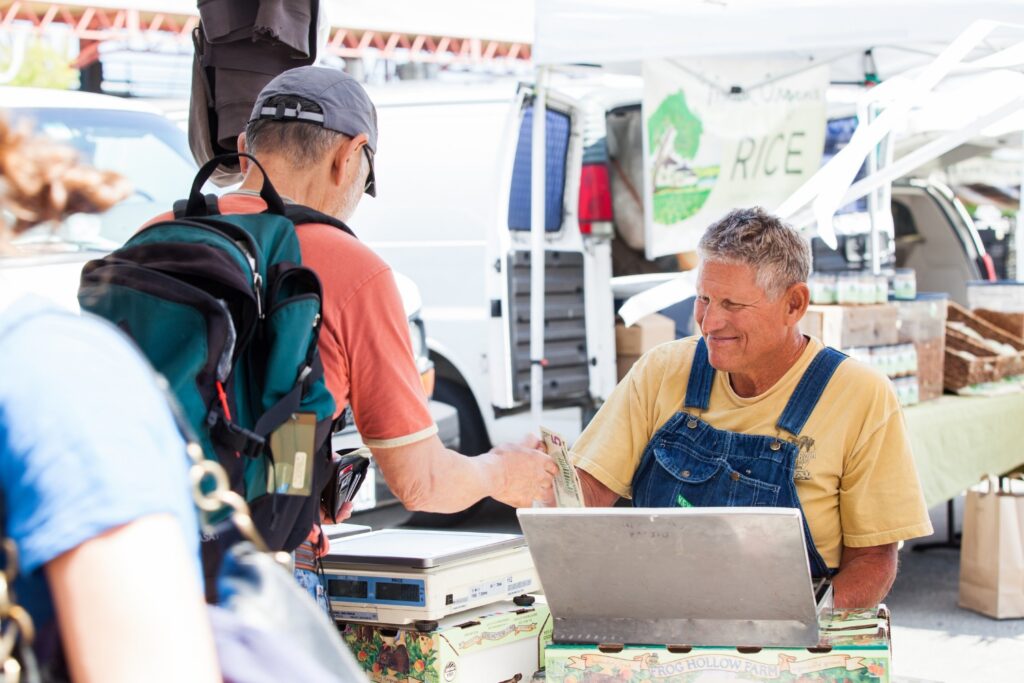
In the 1950s and ’60s, supermarkets rose to prominence, leaving most Americans disconnected from the people who grew their food. It was also illegal for farmers to sell their freshest produce directly to consumers, meaning growers had to rely on wholesale distributors and grocery buyers. It wasn’t until California passed the Direct Marketing Act of 1977 that the farmers market movement began to take off, allowing farmers opportunities to sell their produce without a middleman.
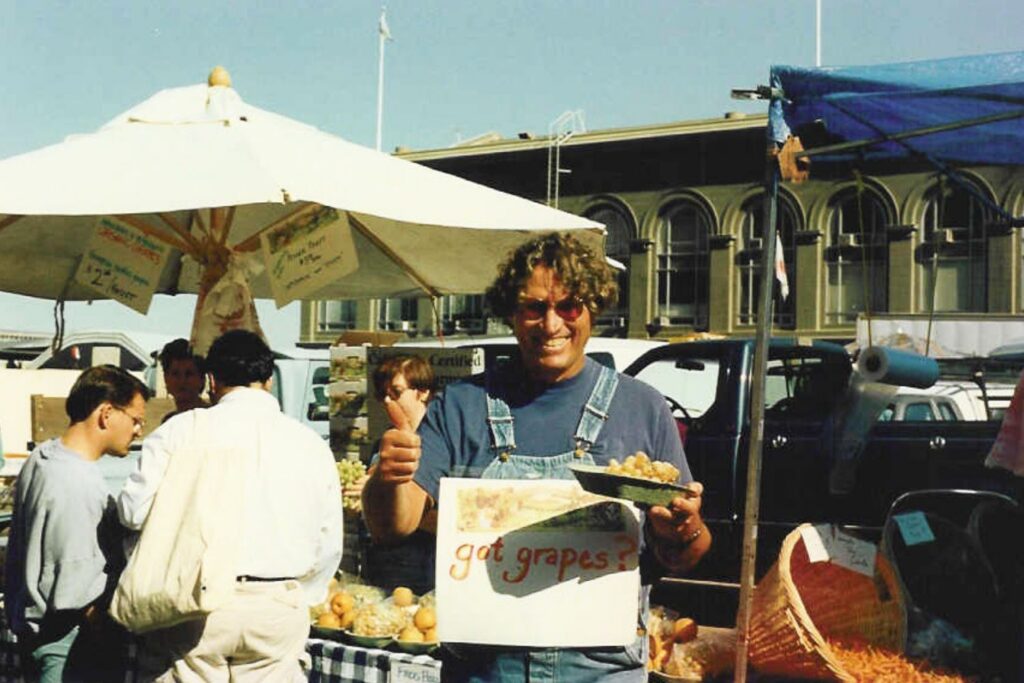
Though their first farmers market was in Walnut Creek, Frog Hollow Farm was one of the founding farms at the Ferry Plaza Farmers Market in 1993.
“Those were exciting times. It was just great to be on the ground with the customers and the fruit, sampling it out, getting their response. The Ferry Plaza customers seemed to be more appreciative,” Al says.
Over the last 50 years, Al has taken great pride in the quality of their fruit. “It’s the sweetest fruit that money can buy. I remember one woman rushing up to the farmers market on a Saturday morning in front of the Ferry Building, back when it was in the middle of the Embarcadero area. She said, ‘Do you still have Cal Red peaches?’ She had been buying them for three weeks in a row. As she walked away, she exclaimed. ‘All food should taste this good!’”
To this day, their fruit is legendary among market shoppers and chefs, with high points throughout the year like their Cal Red and O’Henry peaches and other stone fruit, Warren pears, blood oranges, mulberries, and more.
Showcasing Sweet Fruit to Prevent Food Waste
Before joining Frog Hollow Farm in 1995, Becky Courchesne was a pastry chef who staged at Chez Panisse and worked at both Café Fanny and Oliveto Cafe & Restaurant.
“One of the things that I really loved about being at Café Fanny and at Oliveto was that part of my job was to go foraging. That meant going to Monterey Market and going to farmers markets. The farmers market movement was becoming bigger then, so I got to source really wonderful fruit,” Becky says. “Monterey Market was actually where I was first introduced to Frog Hollow.”
Shortly after joining the farm, Becky was instrumental in the start of their value-added product business, making peach conserves in local kitchens. In 2000, a kitchen was built on the farm, which allowed the team to expand their business and start selling pastries.
“After the fresh fruit is sold, then there’s this product that can go to pastries, it can go to conserves, it can go to dried fruit. And then, the very end of the road for any of the fruit is compost, so everything is being used,” Becky says.
Frog Hollow Farm has many outlets for their fruit, and each outlet works best for different grades of fruit. Becky compares their grading system to a bell curve, where one side is overripe, the other underripe, and “perfect” fruit sits in the center. All of the fruit is good to eat, but the further from the center of the bell curve, the less likely it is to be sold on its own at a farmers market or in wholesale purchases.
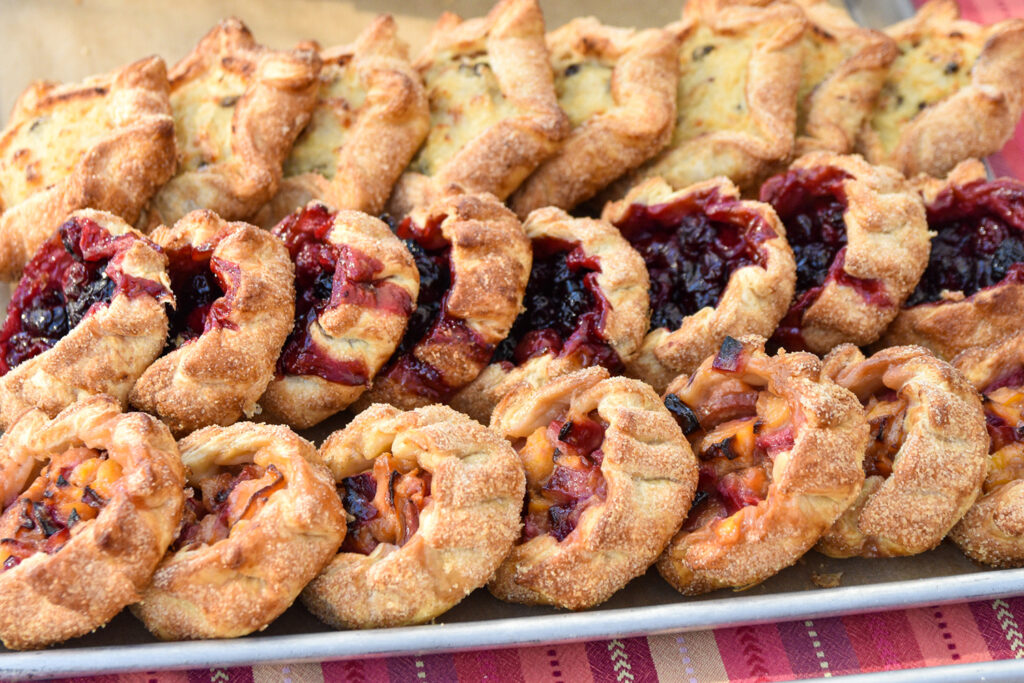
One of the many outlets for their fruit and pastries included a cafe inside the Ferry Building. In March of 2003, the building reopened to the public after a four-year restoration project. Seven months later, Frog Hollow Farm was among the first farmers market businesses to lease a space inside.
“It was just hard logistically, [but] I’m glad we did it, it was a lot of fun. I miss being part of that community in the building,” Becky shares. “It was a beautiful spot. We learned a lot. We met a lot of really great people.”
Ultimately, when COVID lockdowns took place, foot traffic dried up, and they decided not to renew their lease and to focus instead on selling baked goods online, at farmers markets, and at events on the farm.
Becky shares, “Having a kitchen on the farm has allowed us to do events, and it’s rounded out the whole experience of the farm. Because we have a kitchen, we can have somebody like Mario [Ishii Hernandez] be here, a culinary coordinator who has added so much to the farm.”
Celebrating the Team and Looking Forward to the Future
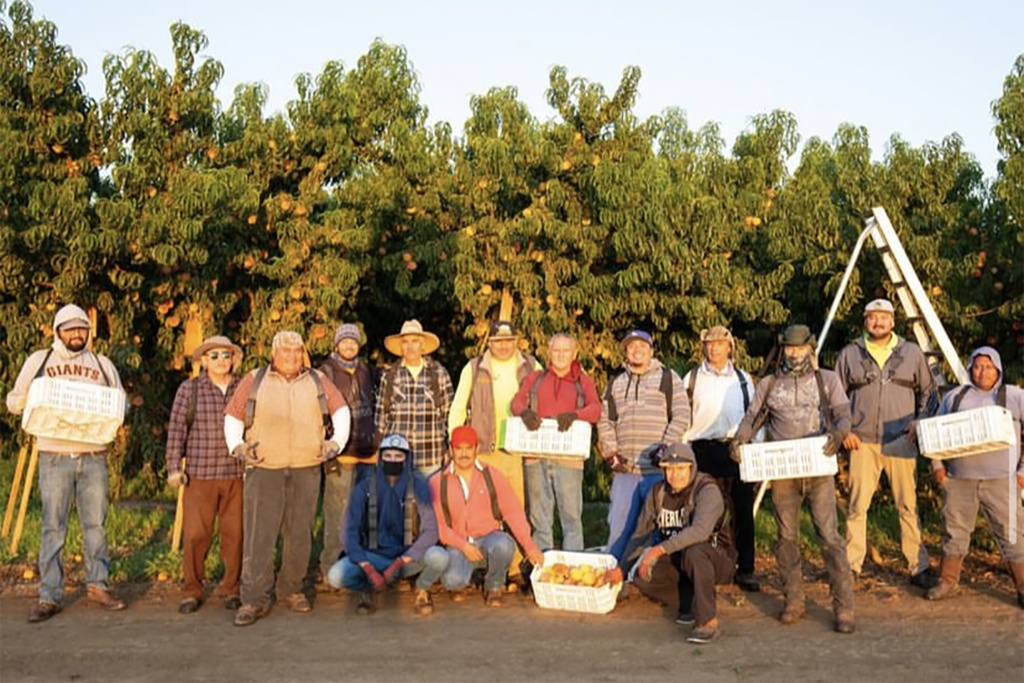
Today, the Frog Hollow team includes Al, his wife and co-owner Becky, fellow co-owner Sarah, and 60 full-time and 110 seasonal employees, all of whom contribute to the farm’s half-century of success.
Frog Hollow aims to value the skills, expertise, and contributions of their team by giving regular pay increases based on the farm’s profits. They also provide housing on the farm with a low rent (around less than 10% of their wages) that rarely increases.
Becky and Al’s daughters, Madeleine and Camille, have joined the operation. “I’m teaching [Madeleine] everything there is to know about running the farm. She goes around with me throughout the day to see what’s going on, to talk to the workers, check the fruit, and decide what to pick next. She’s a very important member of the team,” Al says. Camille has also joined the team, working part-time while in college.
“I’m very bullish about the future. I think it’s going to be great. I think people are finally realizing that the quality of their food matters for their health and the health of their children,” Al says.
Visit Frog Hollow Farm at the Ferry Plaza Farmers Market on Saturdays, and stop by the Foodwise Classroom this Saturday, June 27, for a free cooking demo with Chef Mario Ishii Hernandez, featuring a speaking moment with Farmer Al.
Topics: Farmers, Farmers market