
How Alemany Farmers Market Became ‘The People’s Market’
Sheree Bishop and Brie Mazurek, Foodwise Staff
July 31, 2026

Every Saturday morning, early risers from all corners of San Francisco head to the Alemany Farmers Market at the edge of Bernal Heights, where California farmers have been selling fresh, affordable fruits and vegetables for nearly eight decades. What began as a wartime effort to prevent food waste and keep farms in business has grown into a beloved institution affectionately known as “The People’s Market,” connecting generations of San Franciscans with the region’s diverse food shed.
This National Farmers Market Week (August 2-8), we’re celebrating Alemany Farmers Market, the oldest farmers market in California. Read on to learn more about the market’s history and join us for a community celebration on Saturday, August 8.
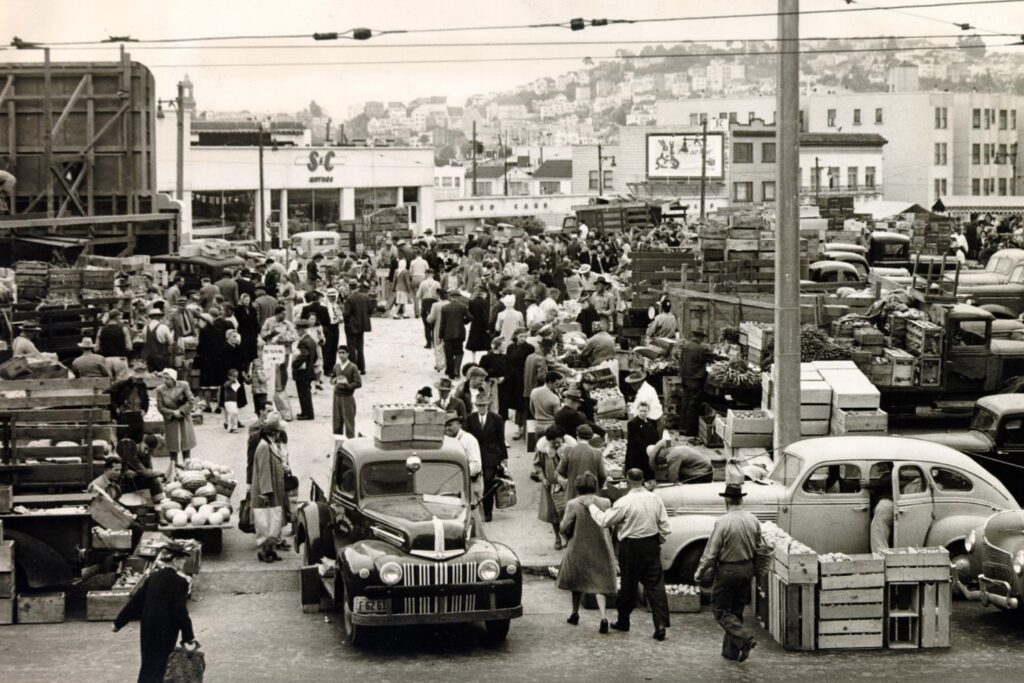
Radical Beginnings: Farmers Respond to Wartime Pressures by Bringing Produce to the People
Originally known as the San Francisco Farmers Market, California’s first farmers market was created in the 1940s as a response to the strain that World War II placed on the local food system. Due to wartime rationing, strict packaging regulations, and agricultural labor shortages, farmers faced overwhelming constraints on the amount of food they could sell. In 1946, congressional price controls lapsed, and food prices skyrocketed, leading people to save their money and rations by tending Victory Gardens and growing their own produce instead.
San Franciscans were surrounded by California’s rich agricultural bounty, but the farmers couldn’t sell it to them. As a result, some growers were facing bankruptcy. In his 1992 memoir, A Sicilian in America, market founder John Brucato wrote, “The [Bartlett] pears were rotting on the ground. There were over 300 tons picked and boxed which could not be sold. We thought, why can’t the consumer journey to the source and get the pears cut rate?”
Brucato worked with Bay Area media to publicize the problem and provide directions to the orchards. When San Franciscans found out that a drive to Sonoma County could save them money on expensive fruits and vegetables, those 300 tons of fruit sold out in one afternoon. People started to wonder just how much of their grocery money was being pocketed by agricultural distributors rather than given to struggling farmers.
As more pear and apple growers in the county reached out to John Brucato for help, he came to understand that without extra gas rations, it wasn’t realistic for farmers to expect business to continue coming to them. If it wasn’t sustainable for San Franciscans to drive to the farms, then the farmers had to drive to the city.
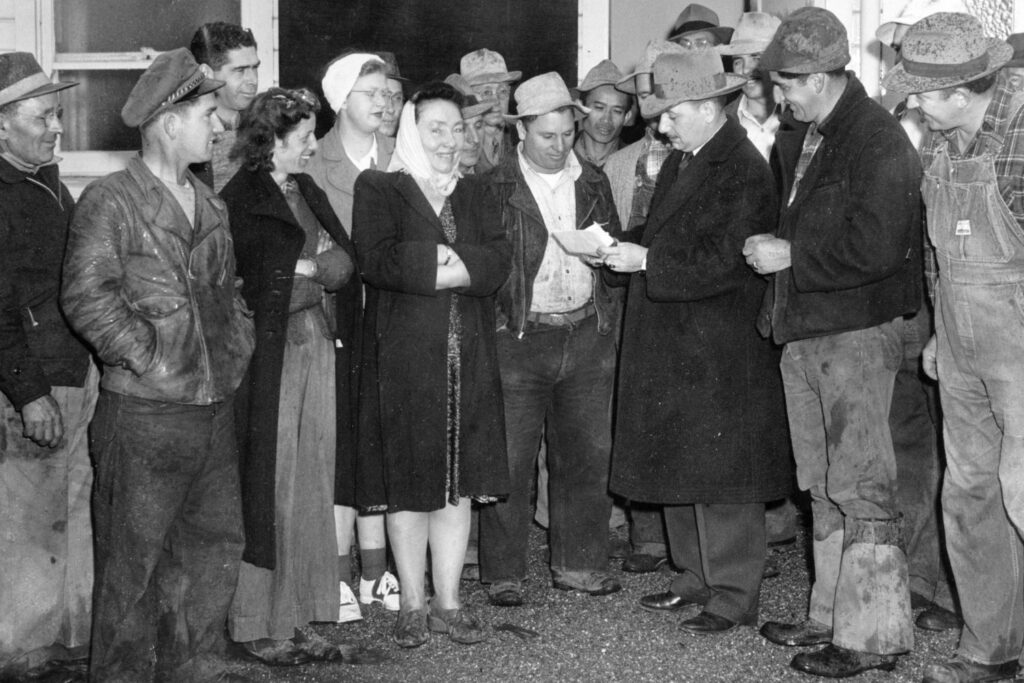
San Franciscans Vote to Make the Farmers Market a Permanent Fixture
In August of 1943, with permission from the property owners and city officials, six farmers parked their trucks on a vacant lot on the corner of Market Street and Duboce Avenue. They sold 25-pound boxes of fruit for a dollar each ($19.30 when adjusted for inflation today). The farmers sold out in less than two hours.
“Thursday was a trickle of six trucks, and Friday’s total was only eight, but on Saturday, all hell broke loose. They came from the north, the east, and the south. First it was fruit and then vegetables. No one really realized the plight of the farmers,” John Brucato wrote.
Local grocery store owners and distributors, as well as the city officials who backed them, immediately opposed the market. They believed that it existed to take them out of business. Their efforts included McCarthyist accusations and political interference.
The Farmers Market Advisory Board (born out of the Victory Garden Advisory Board, led by Brucato) advocated for 11 months for the Board of Supervisors to accept the farmers market as a legitimate part of the local food system. Still, the farmers market faced heavy pushback from the powerful wholesale and retail industry and the politicians who sided with them. At one point, Mayor George Christopher asked for a grand jury probe, suggesting that Brucato and supervisors who supported him were taking kickbacks.
Still, the People’s Market remained highly popular. In 1945, an overwhelming majority of San Franciscans voted to establish a permanent farmers market run by the City of San Francisco on city-owned property. In August of 1947, two years after the proposition was passed, the farmers market moved to its current location at 100 Alemany Boulevard.
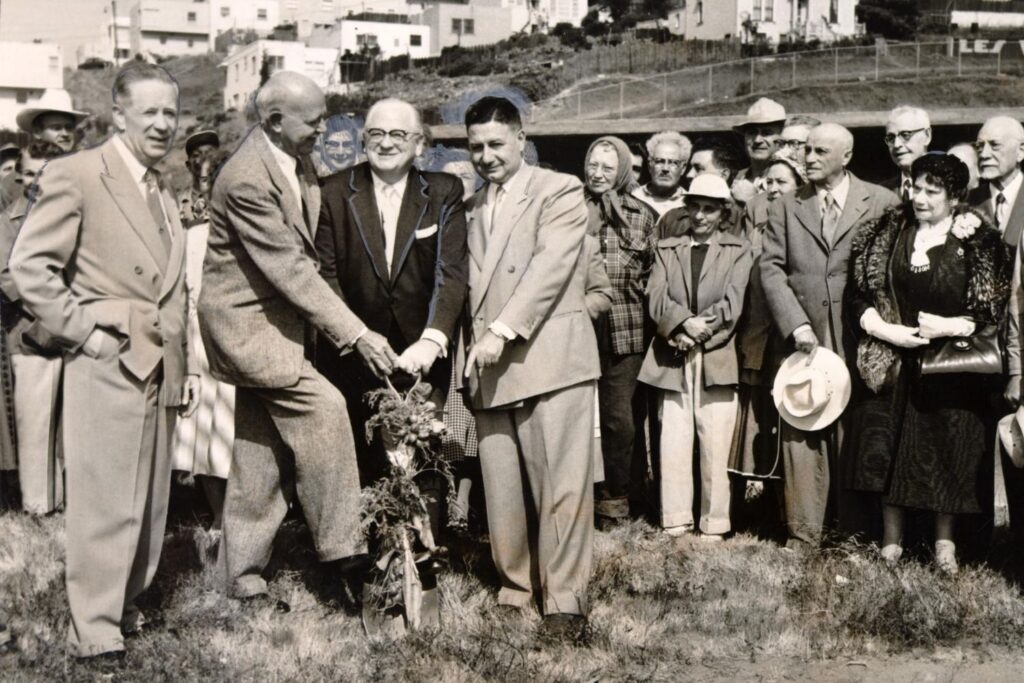
The Farmers Market That Started a Movement
The first week of the market’s operation at its new location attracted more than 80,000 people who purchased more than 125 truckloads of produce. People came from across the Bay Area and beyond, and farmers came from as far south as the Coachella and Imperial Valleys, and as far north as the Klamath Basin. What was at first an open-air market on an open lot eventually included dedicated sheds and a nearby office to accommodate the thousands of shoppers who frequented it.
In 1976, the US government passed the Direct Marketing Act, which lifted many of the restrictions that farmers had to navigate in order to sell their crops without a middleman. As a result, farmers markets began to pop up across the country. In 1948, California had six farmers markets; today, it has more than 700.
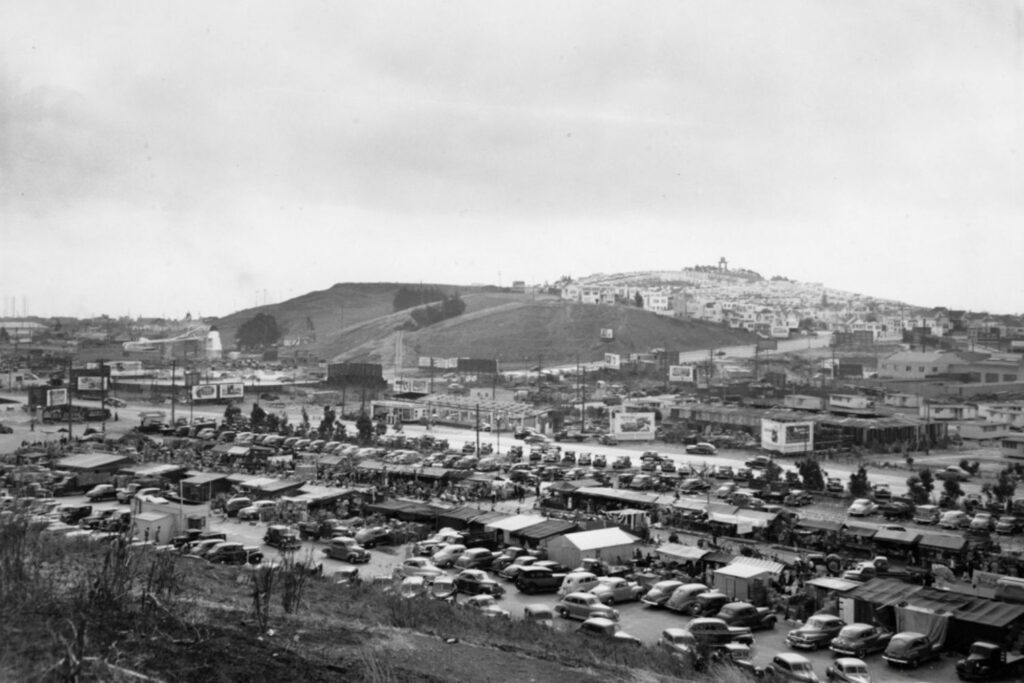
John Brucato continued to advise the Alemany Farmers Market through the 1980s, and eventually passed away in 2003. Later that year, the Precita Eyes Muralists completed a series of murals in the farmers market, each inspired by the diverse communities and farms who make up the farmers market community. The market operators at the time commissioned the murals to help protect the property from real estate developers by depicting the market as a site of San Franciscan heritage.
The market remained under municipal management, operated by the Agriculture Commissioner’s Office and later the Department of Consumer Assurance. When budget cuts led to the department’s dissolution and city restructuring in 2004, the Real Estate Division became the sponsor of the market, because it was located on city-owned land. In February 2026, the City contracted with the nonprofit Foodwise to manage the day-to-day operations of the market.
Next year, the Alemany Farmers Market will be celebrating 80 years at its current location, nestled between the steep hills of Bernal Heights and the scramble of freeways known as the Alemany Maze. Today, the market serves more than 80 small family farms and food businesses and thousands of San Franciscans, with hundreds of EBT shoppers lining up early every Saturday to match their benefits.
True to its roots as “The People’s Market,” the market continues to be a direct line to the bounty of California’s farms, bringing fresh, locally grown, and culturally diverse produce to San Franciscans at affordable prices.
“We established a civic enterprise that was a credit to the city of San Francisco and perhaps one of the greatest accomplishments in the history of urban-rural relations,” Brucato wrote. “The farmer felt at home, and likewise, the city consumer responded in ever-increasing numbers.”
Celebrate National Farmers Market Week at the Alemany Farmers Market next Saturday, August 8, from 9 am to 12 pm. The market takes place every Saturday at 100 Alemany Boulevard, 7 am to 2 pm.
Topics: Farmers market