
This Youth Food Education Program Has Hundreds on the Waitlist. Here’s How You Can Help.
August 14, 2026
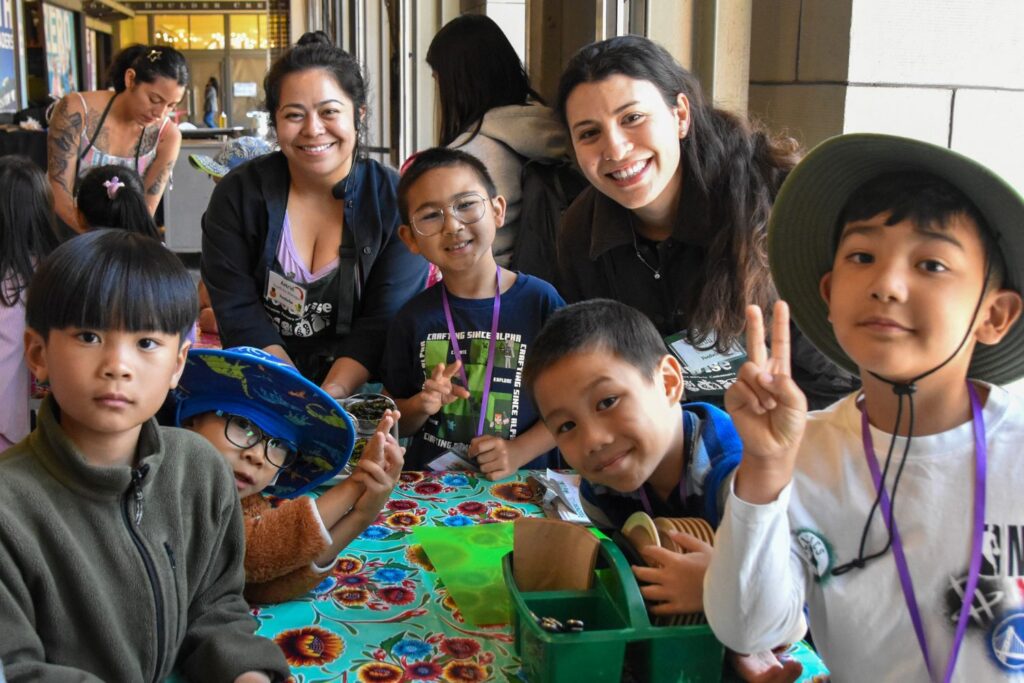
In San Francisco, many students from low-income families live in neighborhoods where it is more difficult to access fresh, healthy food. Through our Foodwise Kids and Foodwise Teens programs, we welcome about 2,000 SFUSD students to Foodwise farmers markets every year. They discover new fruits and vegetables, connect with farmers, and discover their role in a sustainable food system.
We have a long waitlist for these programs, and we prioritize Title I schools, which serve a higher percentage of low-income families. When you donate to Foodwise, you’re ensuring these essential programs remain free for SFUSD students, schools, and parents.
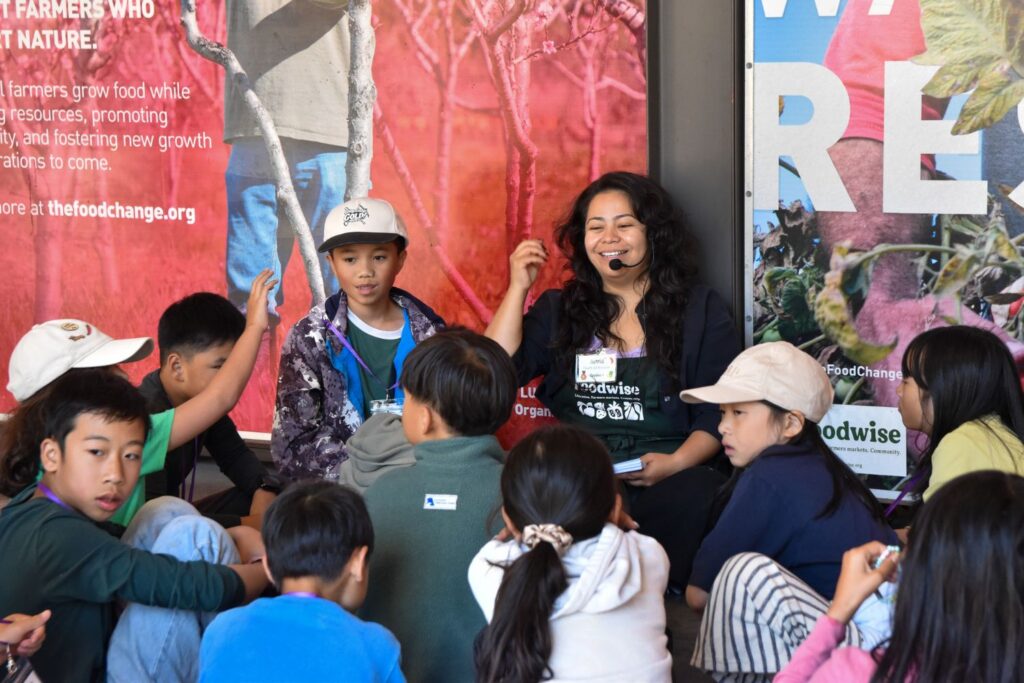
Astrid Bonilla, Foodwise’s Youth Education Manager, is the lead educator who makes it all happen. “Donations allow schools and students to participate regardless of their budget. Most of our students are people of color who come from very underserved backgrounds. Investing in our programs is investing in youth,” says Astrid. “It helps create a healthier community and a more sustainable future.”
Astrid shares what it takes to help thousands of San Francisco students love fruits and veggies and feel the farmers market is a welcoming space for them.
What inspired you to join Foodwise?
One of the reasons why I was so inspired to come to Foodwise was because when I was a teen, my school wasn’t the safest. I remember always looking for safe spaces where I could just be, and be welcomed, and where I could do something productive. I couldn’t find a safe adult, and I couldn’t really find many programs.
The one program I found was called Outdoor Youth Leadership, and they were really great. And I remember working, specifically, with Aaron Byrd. I still think about him so much, and he was probably one of the only safe adults around me when I was a teen. It really inspired me to want to be that safe adult around other teens too.
How do youth programs fit into the mission of Foodwise? What kind of students and schools are prioritized and why?
We don’t have a lot of openings for field trips, and we have so many people who want to come. I prioritize Title I schools. In the classes that apply to come to our field trips, at least 70% or more students qualify for free or reduced lunch. Most of them come from food deserts in the city.
We introduce young people to local agriculture, healthy eating, environmental stewardship, and also the people who grow their food. They get to connect with those farmers and people, ask questions every day about where the food comes from, and taste everything. Through Foodwise Kids, we plant a seed of curiosity at a really young age, while the teens build leadership, job readiness, and confidence as well.
What does your day look like working with Foodwise Kids? How many people does it take to make it happen smoothly?
There are a lot of moving parts on Tuesdays and Thursdays, with the kids classes in the morning and then the teen classes later in the evening. When we get to the teen classes, we’re doing a whole lecture on food systems, food security, advocacy, soil, seeds, seed saving, and even honorable harvest.
It sounds very simple, but in reality, it is a lot of work. After setting up, we have to walk the market. We greet the farmers. We make sure we know which fruits and vegetables they have so we can plan the day’s field trip. When we have double classes, we have to clean and reset because there’s another field trip coming up. By the time that we finish the first class, it’s usually around 12:30 p.m.
It’s a lot of people that make this happen: our youth education staff, which consists of me, the education manager, and a Sustainability Service Corps Fellow who’s usually my coordinator for the year, and the AmeriCorps interns and the volunteers.
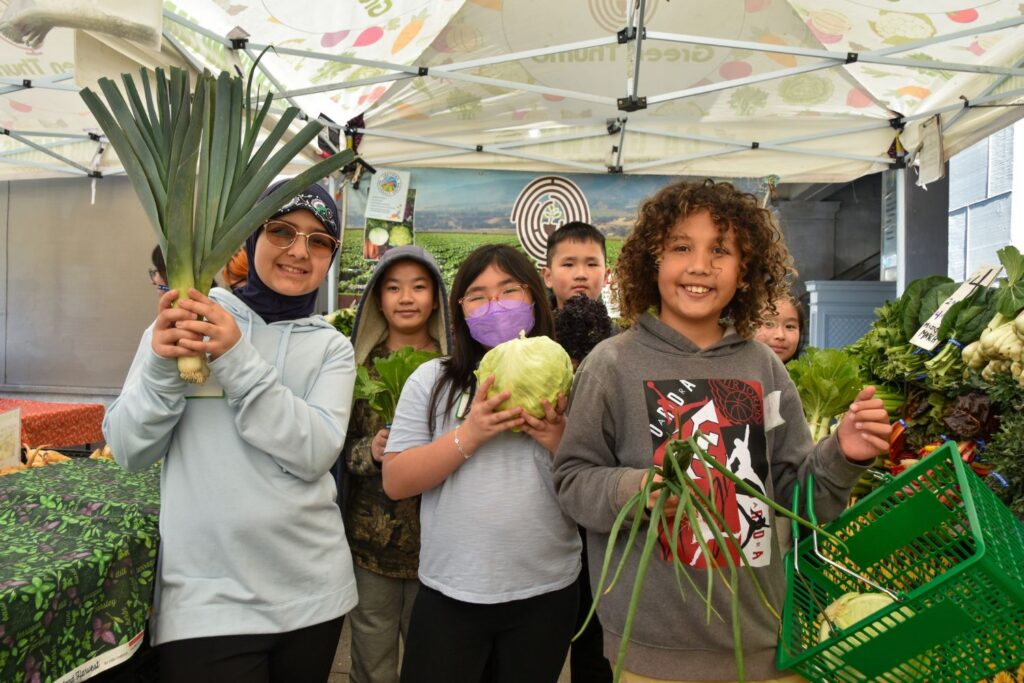
There are also the farmers and the vendors who share their knowledge and their produce with our kids. They’re always so happy to engage with our young shoppers and make sure that they feel welcome. It’s not just the kitchen that turns into a classroom. It’s literally the whole farmer’s market, the people running it, and the people working it that turn into teachers for these kids.

Foodwise is currently seeking a new Education Coordinator. What’s the need for this position in response to demand from teachers?
We definitely need another person. It takes so much to run these classes. To put it in perspective, I get about 280 inquiries from teachers per semester—not per year, just per semester. That’s the lowest that I’ve gotten is 280. And we only have about 60 openings for classes.
Teacher interest continues to grow each year, and we receive a lot more requests than we can accommodate. Having an additional staff member would actually allow us to serve more schools, reduce the waitlist, and increase the number of students who benefit from the programs. And these are students who, most of them, haven’t had access to fresh, sustainable, local, delicious produce.
What activities have you found most successful for engaging students in our food community and getting them excited about fruits and vegetables?
It was actually Aaron from the Outdoor Youth Leadership program who did this first. And I remember it stuck with me forever. He made us get very silly with icebreakers, and I noticed that after just being silly in front of other students, nobody was so shy anymore.
Tasting is also a big thing. Letting the elementary school students taste all the produce and bringing things to the high school students so that they can taste it. Even when we have gardening days and no cooking time, I always bring fresh produce from the market so that the students can still taste fresh fruits and veggies.
It encourages them to ask questions and gives them opportunities to touch, smell, and compare different things, like smelling and tasting raw cabbage compared to cooked cabbage. I like to create a very welcoming and judgment-free environment where they feel comfortable trying something new.
How have you seen the Foodwise Kids field trips have an impact on students?
It’s always beautiful to see that we actually make such a big impact in these very young lives. Students really become excited to try fruits and vegetables. They can interact directly with farmers, and when they have hands-on lessons, sometimes chopping fruits and veggies, and they taste it as they go. I have teachers tell me a lot that they can’t make the kids eat one vegetable at school, but they love it there [at the farmers market].
I see students being shy at first, but because we make it so fun to learn as things grow, um, they become very empowered, more comfortable sharing, even guessing when fruits and veggies grow, and they become very happy when they get it right.
I had this really cute experience at the Stonestown farmers market. I was waiting for my food to come out… A mom approached me, and she was like, “Are you Miss Astrid?” Then she said, “Both of my kids went to a Foodwise field trip a few months back. Now we come to the farmers market every single weekend.”
She opened her bag and showed me that they had bunches of kale, and she said, “We make kale chips every week. My kids would not eat anything green, and after coming to the farmers market, now they absolutely love kale chips.”
I see hundreds of students all the time, so to hear that there are students who remember and actually go home and tell their parents made me so, so happy.
Topics: Foodwise Kids, Foodwise Teens, Youth