
Apples, Pomegranates, and More: A Farmers Market Guide to Fall Fruit
October 16, 2026
As summer turns to fall at the farmers market, stone fruit, berries, and melons make way for autumn’s bounty. Replacing these stars of summer are dozens of varieties of apples, pears, and other fall fruit, many of which you can only enjoy at their seasonal peak when tree-ripened and freshly harvested from California’s farms.
“Pomes”—a category that includes apples, pears, and quince—start appearing on the market stands in late summer. The apple harvest begins in August, ushering in a parade of heirloom varieties that are often only available for a few weeks, such as Gravensteins, Pink Pearls, and Mutsus. Crispy Asian pears and buttery European pears also begin to fill the fruit stands, in all of their colorful varieties. Persimmons and pomegranates start in late September and pick up in October and November, before winter’s juicy citrus begins to dominate the market.
Check out our guides to some common fall fruits below. This October, stop by the orange Seasonal Spotlight tent at Foodwise farmers markets for recipes, cooking tips, and free samples to discover a variety of ways to enjoy them, and celebrate them at our Fall Fruit Celebration on October 31.
Find Fall Fruit at These Farms at Foodwise Farmers Markets
Arata Farms • Blossom Bluff Orchards • Chinchiolo Farms • Devoto Gardens & Orchards • Everything Under the Sun • Frog Hollow Farm • K&J Orchards • Perez Brothers Farm • Rainbow Orchards • Rojas Family Farms • The Peach Farm • Tory Farms • Twin Girls Farm
Apples
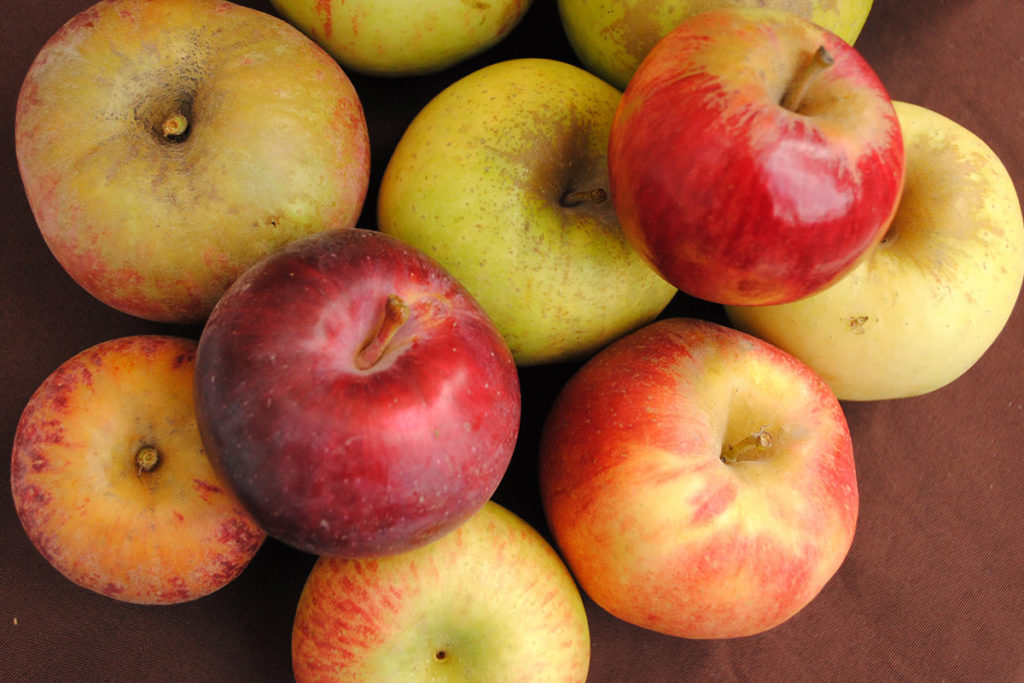
There are over 7,500 cultivars of apples, most of which are harvested for eating, while some are specifically cultivated for cooking and making into cider. August through November is peak apple season at California’s farmers markets. At grocery stores, you might only find a handful of varieties like Red Delicious, but at the farmers market, you’ll find fresh heirlooms, each available for a brief, delicious window of time.
Pears
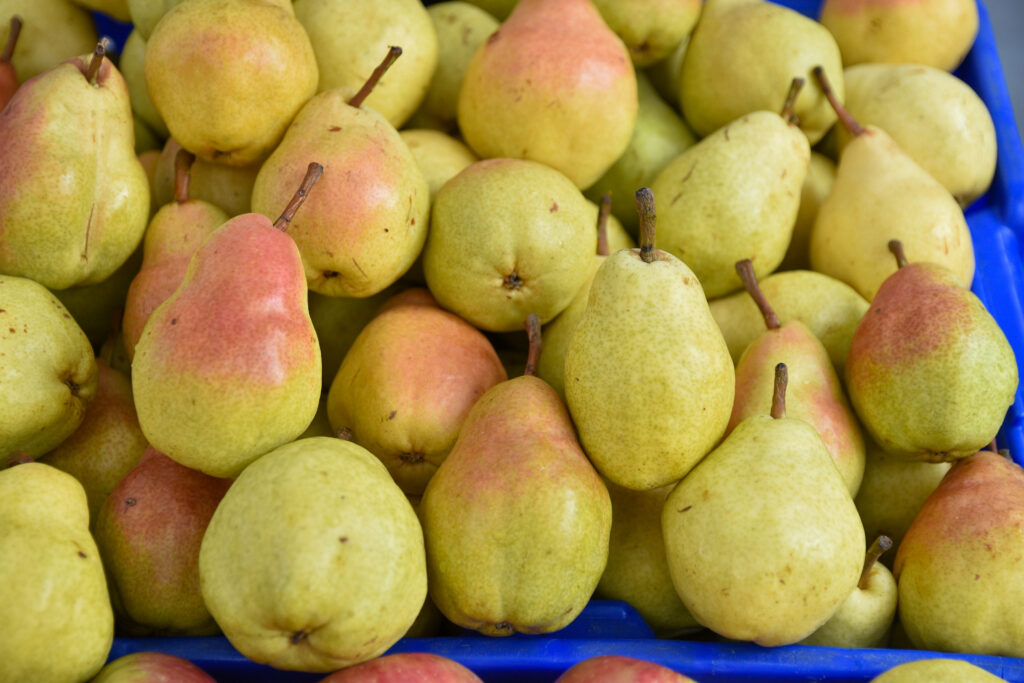
The pear tree and shrub are a Pyrus species, within the Rosaceae family, along with apples, stone fruits, and strawberries. Their distinct, slightly gritty texture comes from their stone cells, which also make up other fruits’ hard tissues like peach pits. There are two main categories of pear varieties, Asian and European. Freshly harvested pears are available from August through November, but cold storage helps farmers elongate their seasonality through the winter months, too.

Persimmons
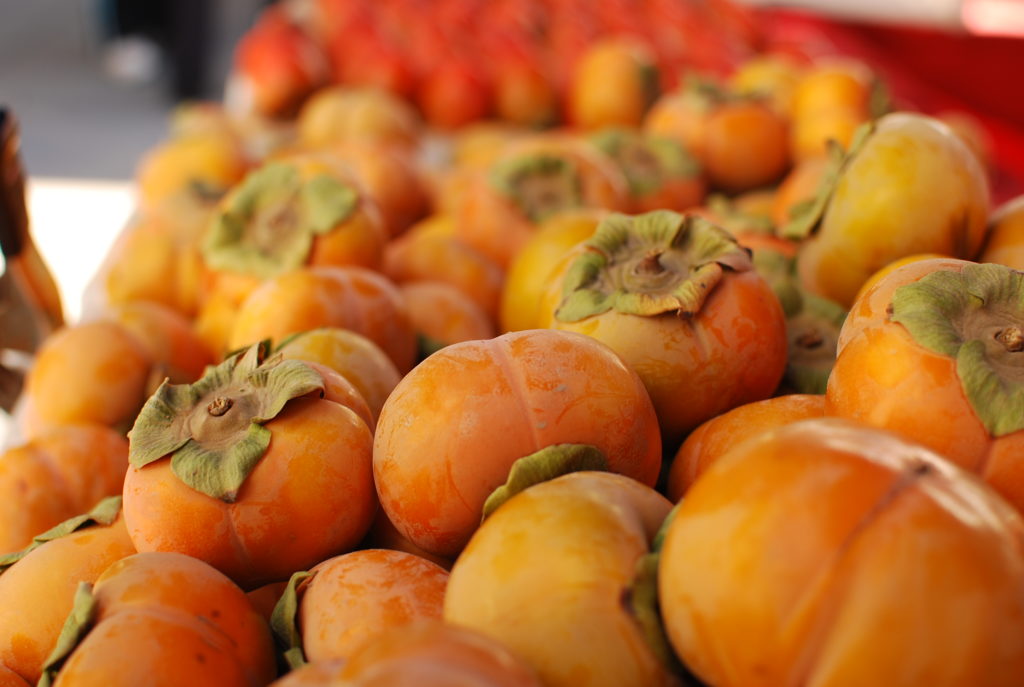
There are several species of persimmon, some native to China and others to North America, but the Asian species Diospyros kaki accounts for almost all commercial persimmon production. There are two distinctly different types of persimmon and many varieties of each type. Astringent varieties, like the Hachiya, must ripen fully before they are eaten; non-astringent varieties, like the squat Fuyu, can be eaten when they are still hard.
Pomegranates
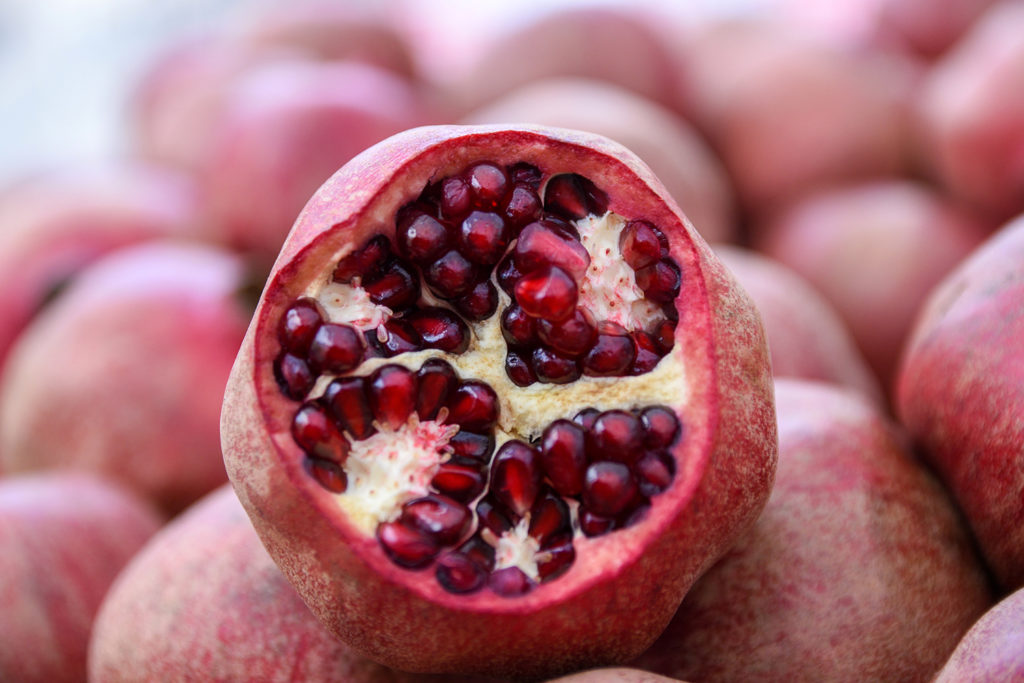
Cut open the pomegranate’s thick and leathery skin to reveal hundreds of sweet and tart sacs (called arils), each containing an edible seed. When picking pomegranates at the farmers market, look for deep ruby tones and check that your pomegranate is heavy for its size. The heavier the pomegranate, the juicier the seeds. Pomegranates are high in antioxidants, like polyphenols, anthocyanins, and vitamin C.
More Fall Fruit
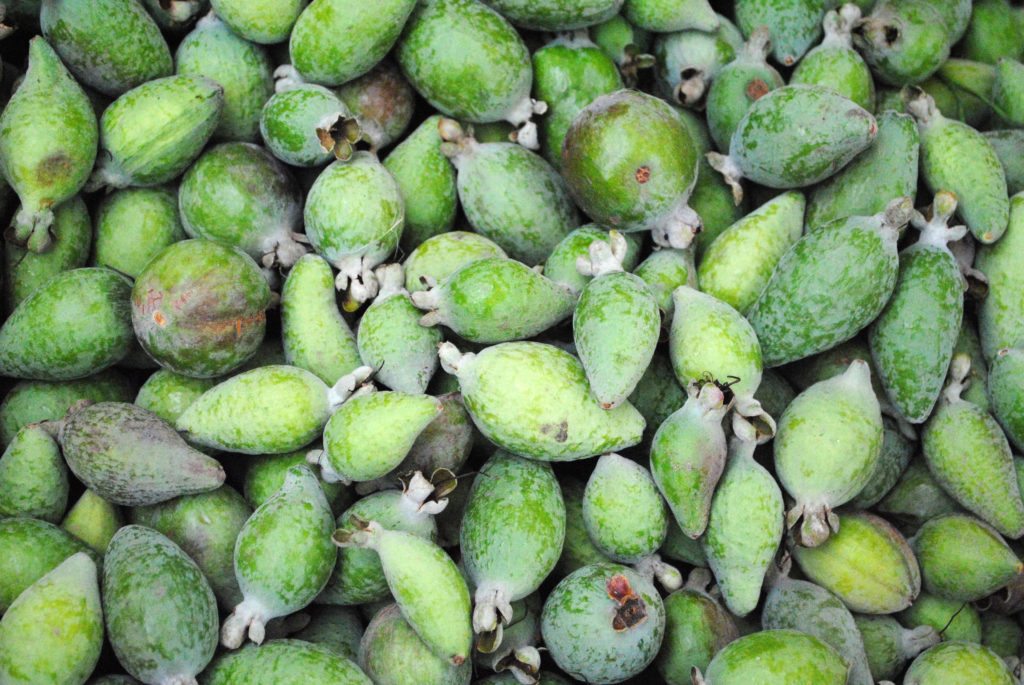
These small green fruits, which are native to South America, are also called pineapple guava. They have a sweet tropical flavor that is somewhere between a pineapple and a strawberry. The inside is generally scooped out and eaten with a spoon. The first of the year’s crop is generally the sweetest.
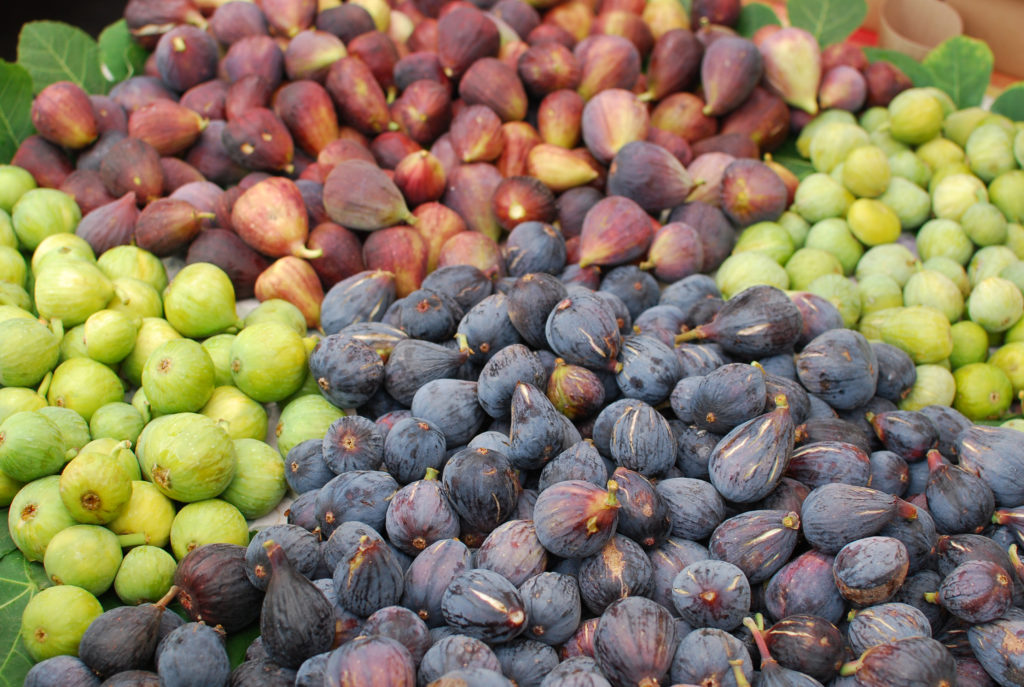
The fig harvest is at its peak in September, but some figs may be available as late as November. The fruits pose problems in the industrial food system because they must be picked soft and are extremely delicate, which makes them a perfect candidate for farmers markets. Farmers selling their crop straight to eaters can pick fruit the day before market.
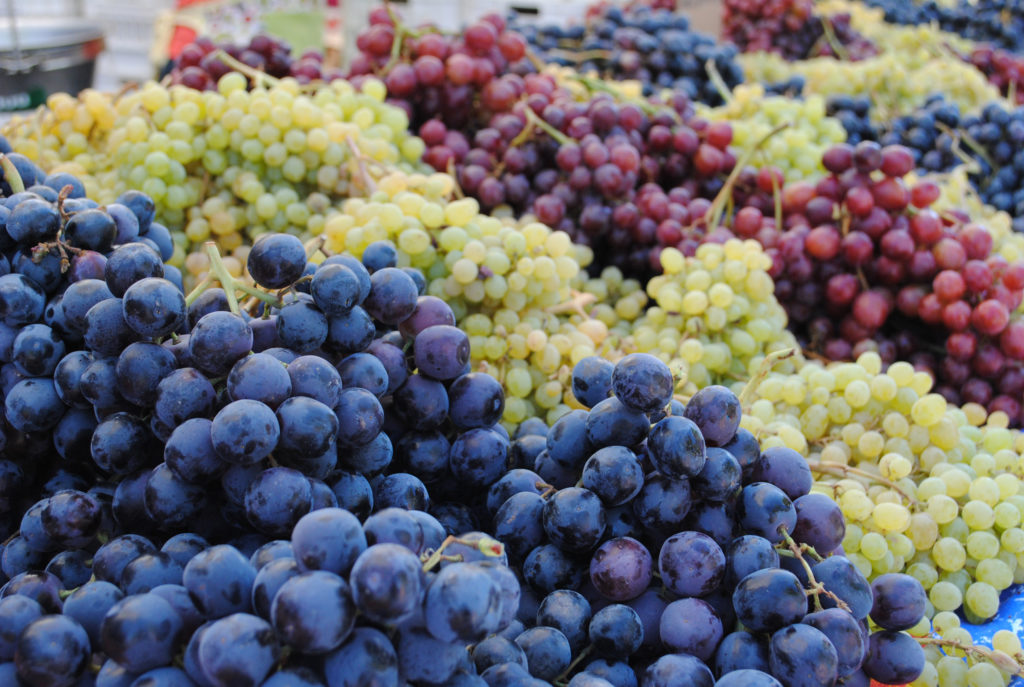
Grapes may be one of the earliest cultivated fruits on Earth. The Greeks harvested the berry for wine-making, and the Romans later perfected the practice, understanding the importance of pruning, climate, and proper storage. Franciscan Friars later brought the grape to California. There are three main species of grape (European, North American, and French Hybrids) and thousands of varieties, a few of which are available at the farmers market.
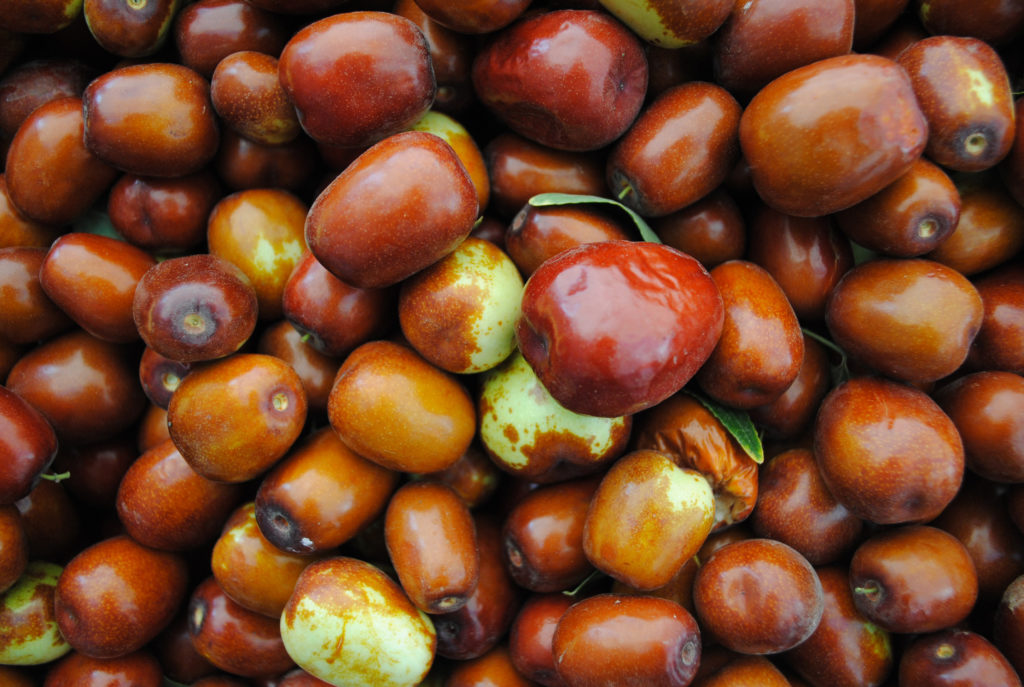
Also known as Chinese date or red date, the jujube is a small, oval fruit with a light green exterior that turns reddish-brown and wrinkly as the fruit ripens. Some say it is similar in taste to apple, but the jujube is sweeter than tart and has a dry, spongy texture. Jujubes can be eaten, fresh, dried, pickled or preserved, and they have many uses in Asian cuisines and traditional medicine. They’re also an excellent source of
vitamin C.