
How Your Support Can Keep This Climate-Wise Farm Thriving for Generations
December 19, 2025

Small sustainable farms are the stewards of a climate-wise future, and the direct support of community members like you is vital to their future. Since 1993, we at Foodwise have been committed to connecting Bay Area residents with fresh, locally grown food and ensuring California farmers can earn a livelihood at our farmers markets. When you support Foodwise, you are contributing to an interconnected local food community, where small-scale, climate-wise farms can thrive.
Farmer Bryce Loewen’s path to becoming a farmer was not a direct one, even though he grew up on his family’s farm, where he experienced firsthand the hard work and challenges of farming. For four generations, Blossom Bluff Orchards has been farming in California’s Central Valley, and they have sold their delicious, organic fruit at the Ferry Plaza Farmers Market for over three decades. Through the community and opportunities Bryce experienced at the farmers market, he chose to continue the family’s farming legacy.
With the average age of a farmer being 58.1, supporting the next generation is more important than ever. In a recent speech, Bryce shared his journey to becoming a farmer, what gives him hope for the future, and why your support of Foodwise is critical for small organic farms like Blossom Bluff Orchards.
Four Generations of Farmers
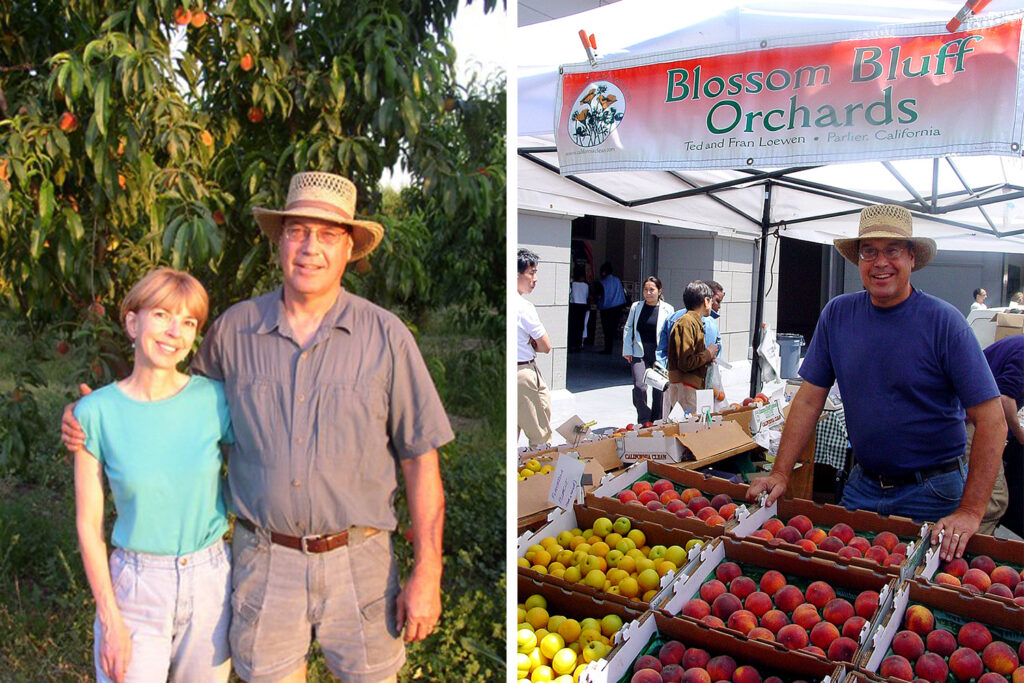
My name is Bryce Loewen, and I am a fourth-generation farmer. I’m farming today because of the vision of my parents, Ted and Fran, and their parents and grandparents before them. Together with my sister Renata, we grow very good fruit at our family farm, Blossom Bluff Orchards.
Our farm in Fresno county is relatively small by “big ag” standards. It’s only 78 acres, but we grow over 150 varieties of fruit. Our growing practices are organic and regenerative, which is important to us for a lot of reasons. Topping that list is the fact that we all live on the farm and we want a clean, natural environment. I’m sure you can relate.
From “Grandpa’s Farm” to “Our Farm”
I grew up on the farm, but it wasn’t always my plan to become a farmer.
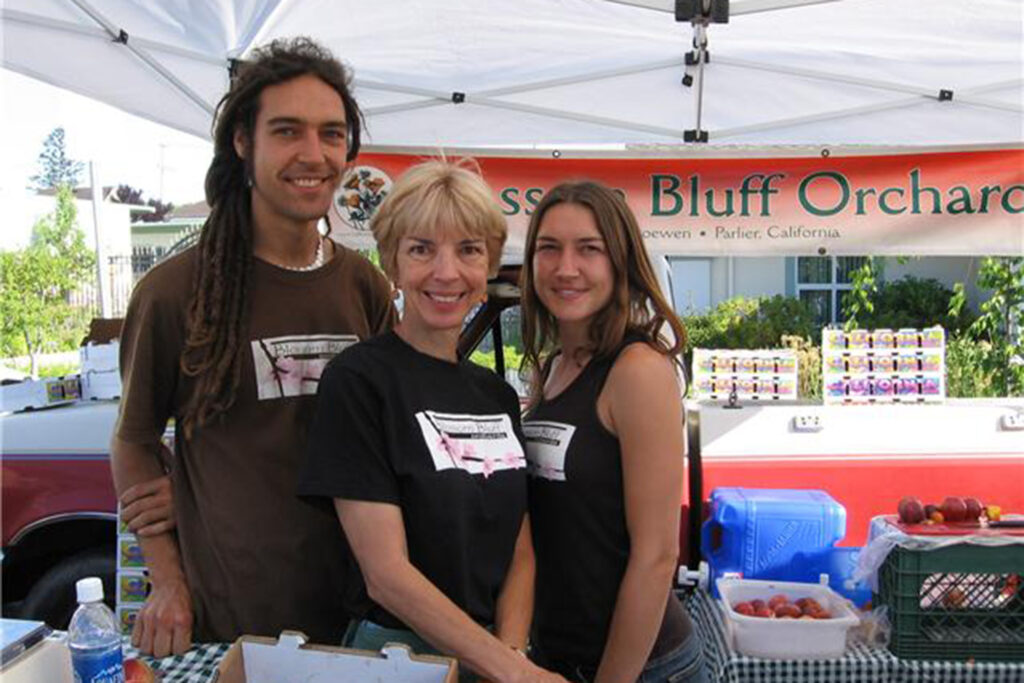
When I was a kid in the 80s and early 90s, farm life could be kind of lonely. My grandparents lived down the road in their house by the packing shed, so there was family around, but no kids my age in the near vicinity. Back then, my mom was a teacher, and my dad was a lawyer, so I thought of it as “Grandpa’s farm,” not “our farm.”
When Renata and I got to be old enough, we were given the opportunity to earn some money helping out at Grandpa Herb’s packing shed. I remember spending 8 to 10 hours slowly pouring buckets of plums into the sizer. It was mind-numbing work, and the highlight of the day would come when I finished off a trailer, because that meant I got to get on the tractor at age 13, drive it forward about 30 feet, and then move the next trailer into position to repeat the process. Summer in the Central Valley meant three-digit temperatures. It was boring, sweaty work, and the only real satisfaction it provided was the paycheck at the end of the week.
In 1989, my dad pulled a “Green Acres” (which is a reference you younger folks might not get, but it’s worth a Google). He had decided he was done with practicing law and wanted to take a shot at farming. It took us all by surprise, especially my grandfather, who had pretty much resigned himself to selling the farm once he was ready to hang up his boots.
It ushered in a new era on the farm because my dad decided to make some radical changes. Over the next few years, our farming practices became more environmentally conscious and “cleaner.” Our orchards diversified from 20 varieties of stone fruit into a mishmash of “obsolete” but delicious heirloom varieties, like Elberta peaches and Elephant Heart plums growing alongside newfangled hybrid fruits called “pluots.”
Finding a Calling and Community at the Farmers Market
And then another big change happened. In the early 1990s, we started selling fruit directly to customers at farmers markets, first in Fresno and then branching out into the greater Bay Area. While scouting out new markets in the summer of ’93, my folks came across a brand new farmers market set up in front of a decrepit, boarded-up Ferry Building. (Just look at it now!)
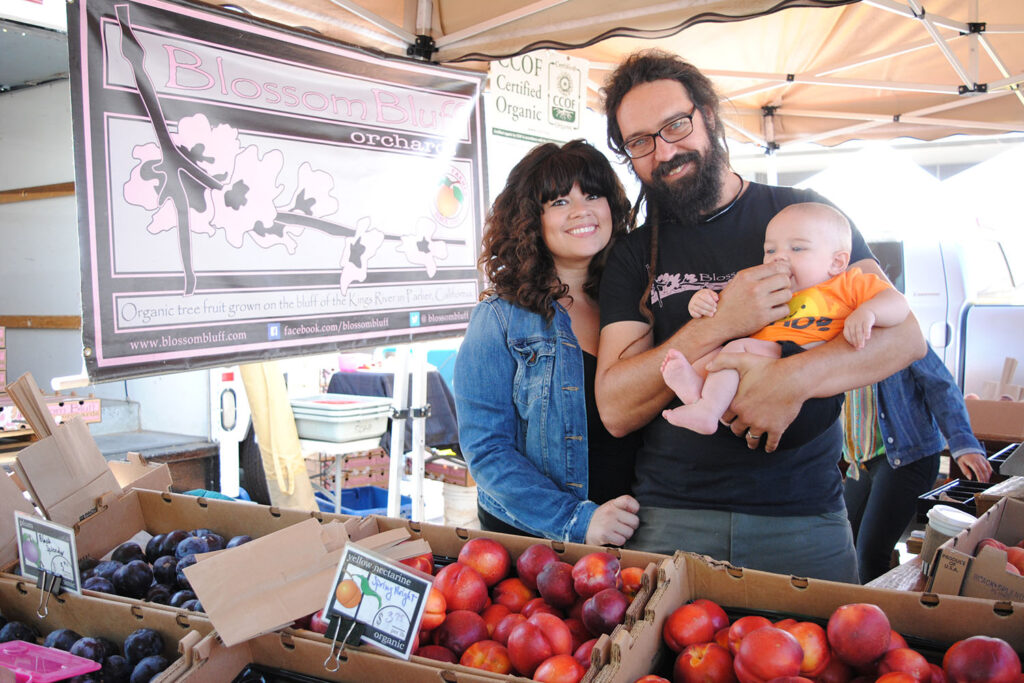
We landed a spot at the Ferry Plaza Farmers Market the following summer, and that’s really when my journey started to change course. All of a sudden, farming had more to offer than feeling lonely, stacking boxes, and sweating a lot. It became an opportunity to connect with a larger community that appreciates the remarkable bounty and quality of local food that we have access to here. It was gratifying to contribute to this unique system, and it changed how I envisioned my future on the farm.
You are a part of that community, because you care about healthy food, healthy farms, and the health of our planet. The fruit that we bring to the farmers market is better than what you find at your average grocery store for a reason. Since it doesn’t need to survive weeks of cold storage or a cross-country trip in a reefer truck, we are able to let it ripen longer on the tree to reach peak flavor. Not only are we reducing our carbon footprint, but you get the benefit of a superior quality of fruit.
At the farmers market, we have an opportunity to connect farmer-to-consumer. When I can talk to you and share a bit about the hard work and care that goes into that juicy Elberta peach, I feel the appreciation reflected back at me. That kind of connection is lacking in the modern food web, and it is both valuable and mutually beneficial.

Farming for the Future Generations, Despite the Challenges
I’ll be honest. Farming is a challenge, even in the best of times. There’s a reason not many young people want to go into farming, and why many small farms are disappearing. Some of our greatest challenges are not just growing high-quality fruit, but variables like climate change, water insecurity, and a political environment that is unkind to many of the talented people who provide the labor required for organic production. In addition, recent cuts to certain federal programs not only hurt children by taking away a vital resource that provides fresh fruits and vegetables, but also the farms that supply those programs.
In spite of these challenges, I have chosen to commit myself to the farm because, at the end of the day, I find satisfaction in what we do. I sleep easy knowing that our regenerative practices are paving the way for the next generation: my sons, Archer and Jackson.
My parents never pressured me into taking over the farm, and I have no intention of pressuring them. But I am planting seeds. My oldest, Archer, is nine. This summer, he started helping me sell fruit in Fresno, and he’s a natural. Chatting up customers, making change, and trading fruit with the other vendors like a seasoned pro. His six-year-old brother, Jackson, plans to fix up all of our old tractors as soon as I let him use power tools. I hope that they find the same value that I have found in farming, and I would love for them to continue in my footsteps if they choose to.
Our farm would not exist without nearly a century of sweat, stewardship, and dedication by my great grandparents, my grandparents, my mom and dad, and now Renata and me. Thank you for your part in helping farms like ours thrive, so that my sons will have the opportunity to continue the hard but honorable work of growing very good fruit for you and for the generations that follow.
Foodwise needs your support to operate our farmers markets, so that climate-wise farmers like Bryce and his family can continue to deliver delicious organic food to our community. Donate today to keep our Bay Area food and farm community thriving in 2026 and beyond.