
How Local Organic Farmers Are Adapting to and Fighting Climate Change
Sheree Bishop, Communications Coordinator
April 17, 2026
The Earth’s climate is more out of balance now than at any time in recorded history, according to the World Meteorological Organization. The harmful practices of large-scale industrial agriculture contribute to worsening climate change, which has led to erratic weather, including more frequent heat waves, and more intense droughts and rainfall, among other phenomena.
As unpredictable weather continues to swing between extremes, local organic farmers remain resilient, using agricultural practices that care for the earth and ensure its vitality for future generations by prioritizing soil health, being mindful of water use, and encouraging biodiversity.
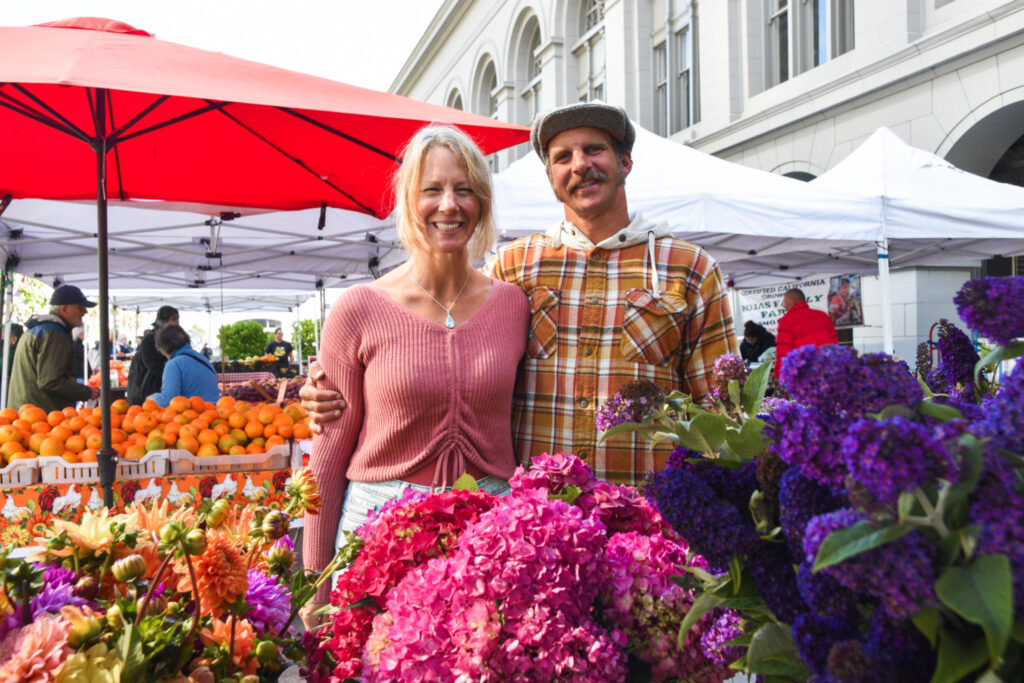
We spoke to two organic farmers at the Ferry Plaza Farmers Market about the changes they’ve seen on their farms this season, how they are adapting to them, and why they choose to farm organically as a response to climate change.
Adapting to Sudden and Unexpected Heat
Though there is always a degree of natural variability, California has experienced increasingly erratic weather in recent years as a result of climate change. Since he started farming in 2010, Kenny Baker of Lonely Mountain Farm says he has experienced unseasonably high rainfall and sudden drought.
“We’re very adaptable, but the weather is definitely out of control,” Kenny says. “They kind of predicted that climate change wasn’t going to be a trend in one direction. It was just going to be erratic, all over the place. And they were right. I think that’s happening.”
From 2019 through 2021, California farmers experienced the driest two-year period on record, with 85% of the state experiencing extreme drought. It wasn’t until this year, after one of the wettest holiday seasons on record, that California became drought-free for the first time in 25 years.
Farmer Janet Brown of Allstar Organics has also noticed changes in rainfall. “The rain kind of stopped and lit up around February. I was expecting that it would just keep raining on and off, and it didn’t. We had droughts in 2021 and 2022, two back-to-back droughts that were really difficult for us,” Janet says.
This March, San Franciscans experienced 80°F weather for the first time ever this time of year, while a record-breaking heatwave brought temperatures over 100°F in some parts of California, affecting crop growth on local farms.
Despite its typically mild climate, Santa Cruz County, where Lonely Mountain Farm is located, saw temperatures in the mid to high 90s for several weeks. “We had a bunch of peas this year that like a cool climate, which we rely on in the early spring and late winter. And, you know, we lost all our peas because they don’t like 95 degrees.”
For Kenny, adapting to sudden temperature changes means deviating from practices on the farm that have been a given in the past, like relying on rainfall for irrigation in the winter and spring.
“It just comes down to doing things that you wouldn’t really want to be doing, like irrigating in January, February, March,” Kenny shares. “Our water bill is now 12 months out of the year or pretty close to that, rather than seven months, when you can rely on some rain.”
Protecting Soil Health
Industrial agricultural businesses are responsible for just over 30% of global greenhouse gas emissions. The nature of large-scale industrial agriculture turns the earth into a means to an end. Through excessive tillage and pesticide use that damage soil health, large industrial agriculture often pollutes the earth, while profiting from its resources. The choice to farm organically is also a choice to prioritize the health of our natural resources and leave fertile soil for future generations.
Protecting soil health is one natural solution to fighting climate change, because healthy soil stores carbon. When soil health is disregarded, the soil can degrade and lose carbon to the atmosphere, reducing the land’s ability to absorb carbon dioxide and increasing greenhouse gas emissions.
Making the choice to farm organically is more than assigning a label to produce. Certified organic farmers commit to protecting the soil and leaving the Earth in the same or better condition than they found it.
Why Local Farmers Choose to Be Certified Organic
Making the choice to farm organically is more than assigning a label to produce. Certified organic farmers commit to protecting the soil and leaving the Earth in the same or better condition than they found it.
Kenny has been farming organically for 16 years. Promoting biodiversity and keeping tillage to a minimum are choices that come naturally to him.
“We farm 15 acres, and there are no two rows that are similar. Everything is diverse. I’ve got young kids, and I like nature a lot… I don’t want to be part of that legacy where we’re adding poisons into our waterways and our soils and stuff. It just seems obvious,” Kenny says.
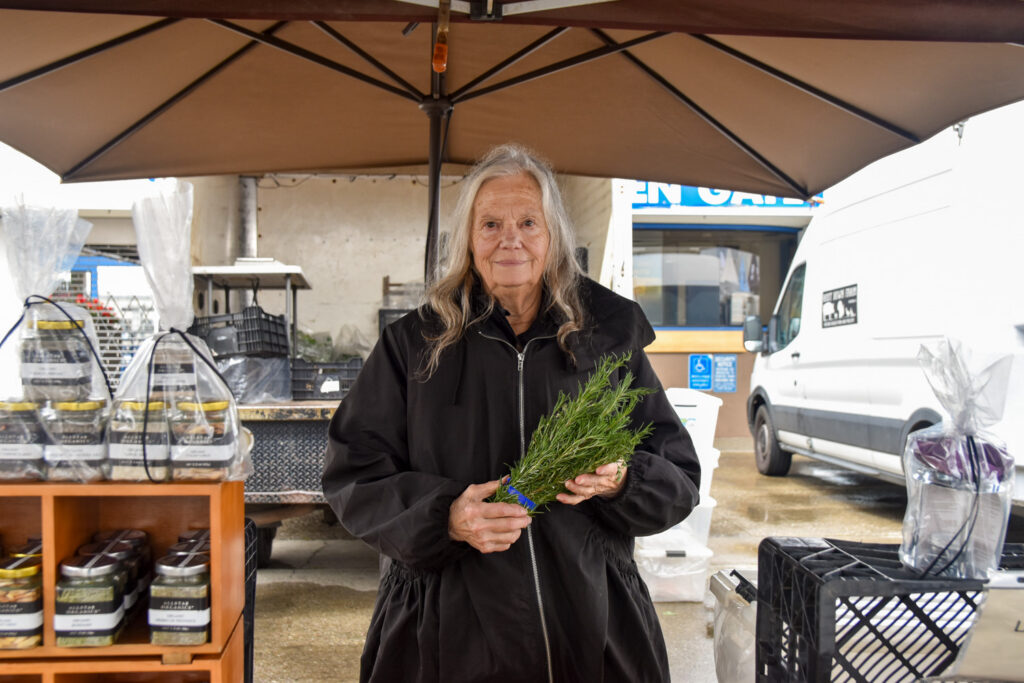
For Janet, the choice to farm organically came from her childhood. “As a kid, I was always into gardening. And then I became an organic gardener and had large kitchen gardens, and that just moved into the opportunity to become an organic farmer.”
Being certified organic is also central to how she and Marty Jacobson run their business.
“Marty usually says, ‘If we couldn’t farm organically, we wouldn’t be farmers.’ I think that’s true, but it also encourages a deeper and more connected relationship with nature, where you’re working hand in hand. You need to be one element of a biological system and understand your part in it,” Janet says.
She continues, “It actually is possible to eat your values. You just seek out those foods that are grown according to what you say you care about. And one bite at a time, together we can build the world we dream about.”
Support Lonely Mountain Farm and Allstar Organics at the Ferry Plaza Farmers Market on Saturdays.
Topics: Climate change, Farmers