
6 Food and Agriculture Policy Changes You Need to Know
March 13, 2026
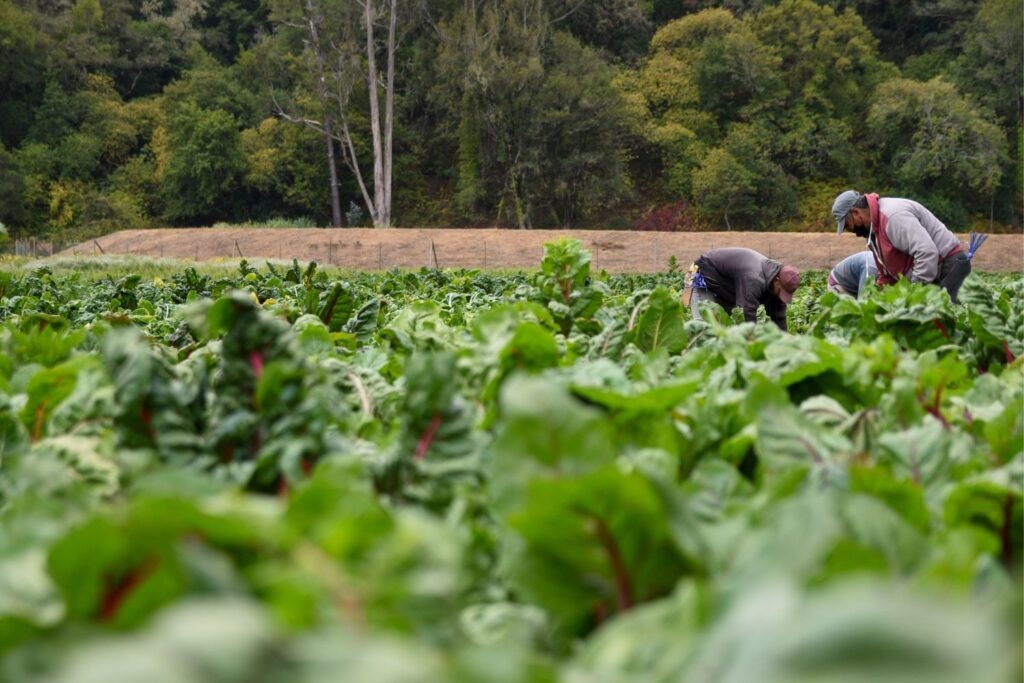
Last year, we summarized 5 food and agriculture policy areas to keep an eye on in 2025. Now, 14 months into the second Trump administration, sweeping policy changes have had a vast impact on every aspect of our food system, from immigration sweeps causing fear in farming towns to SNAP cuts putting millions of food-insecure people at risk. Here are some of the most important food policy changes that have taken place since Trump’s inauguration.
Trade Wars and Immigration Sweeps Have Hurt Farmers
Trump’s excessive tariffs and trade war have harmed farmers nationwide. Soybean farmers saw sales drop to zero in May 2025 after China refused to purchase any U.S. soybeans and instead turned to Argentina. On February 28, 2026, farmers began receiving funds from a $12 billion aid package meant to support those affected by the trade war.
Though Trump has said that the $12 billion is funded by tariffs, the funds actually come from the USDA’s Commodity Credit Corporation, which uses taxpayer dollars. Up to $11 billion dollars will be focused on producers of major row crops, including soybeans, rice, and wheat.
A 2022 survey from the USDA confirmed that 40% of all people working in agriculture are from Mexico. Despite the contributions that immigrants from all countries have made to the American economy, the second Trump administration has carried out an aggressive and race-based mass deportation effort.
On September 8, the Supreme Court decided that ICE is allowed to make investigative stops based on race, the type of job someone appears to have, and whether they speak Spanish or English with an accent. This will impact Latino communities at large.
As a result, farmworkers in California are worried that they won’t be able to return for work after the season ends. They are forced to weigh providing for their family against their own safety. Rather than going out to shop or eat, some Central Valley farmworkers go into hiding when their shifts end.
Pesticide Companies Become Protected from Liability
Pesticides and herbicides are used regularly by farmers to protect their crops. However, these products can contain chemicals that harm the environment and cause illness.
In February, Donald Trump issued an executive order that supports the production of glyphosate-based herbicides by protecting herbicide companies from liability, guaranteeing demand for their products, and blocking the Secretary of Agriculture from issuing any rules that threaten their company’s viability.
Monsanto’s Roundup is a popular example of a glyphosate-based herbicide. In the last 11 years, Monsanto has seen 125,000 lawsuits claiming that it causes cancer. The most recent of these ended in a $7 billion class-action settlement, though Monsanto and Bayer (its parent company) consistently deny wrongdoing.
In addition, the Environmental Protection Agency approved the use of two pesticides containing PFAS (also known as ‘forever chemicals’) for use on several crops, including beans, tomatoes, oranges, and more.
The Trump administration has also launched a $700 million voluntary regenerative agriculture program. Even though conservation groups welcome the additional funding, there are several concerns about the administration’s failure to address pesticide use, as well as potential issues with allocating these funds and supporting farmers, given staffing shortages from mass layoffs at the start of 2025.
House Republicans Introduced a Controversial Draft of the Farm Bill
The last Farm Bill, which lapsed in 2023, provides support to American farmers and creates safety nets for people experiencing food insecurity. In February 2026, House Republicans produced a new draft of the Farm Bill.
The draft contains several controversial sections. Among them is a provision that would get rid of California’s Proposition 12, which prohibits the sale of pork from livestock raised in gestation crates.
During the Biden era, the Local Food Purchase Assistance and the Local Food for Schools programs were created to help schools and food banks purchase food from small and mid-sized farms in their area. Even though both programs were set to end in 2026, Secretary of Agriculture Brooke Rollins cancelled these programs in early 2025, a few months after taking office.
The new draft farm bill would create a new program modeled after the old ones, with an additional $200 million in funding. Even though this is one of the few provisions of the bill with bipartisan support, the language in the draft doesn’t make this funding mandatory. This means it will be difficult to make sure the program receives continued funding each year.
New Restrictions to SNAP Benefits and Eligibility
For 60 years, SNAP benefits could be used to purchase everything except for alcohol, tobacco, hot and prepared foods, and personal care products. Before Trump’s second term, bipartisan administrations consistently denied waiver requests from states trying to restrict SNAP-eligible foods, citing that the definition of “food” couldn’t be waived.
In 2025, the Trump administration granted waivers to 18 states. Many focus on candy and sugary drinks, and each one has a different definition of what should be banned. These waivers could set a dangerous example for other safety net programs that use waiver provisions.
In July 2025, H.R. 1 was signed into law, leading to the biggest funding cuts to food assistance in history. In California, over 3 million people will lose access to their SNAP benefits throughout 2026.
In October, the SNAP-Ed program was eliminated, causing 2 million people to lose access to important nutrition education and obesity prevention programs. In April, 74,000 refugees, asylum seekers, and other lawfully present immigrants will no longer be eligible for CalFresh. In June, there will be stricter work requirements for every SNAP recipient between 18 and 59 who does not have dependents. As eligibility rules are further tightened this year, many more will become food insecure once again.
Budget Cuts Eliminate Food Education Programs and Research
Research on food access and food education is essential for people of all ages to be informed about every aspect of our food system. In addition to cancelling SNAP-Ed, the USDA announced in September 2025 that it would discontinue the annual Household Food Security in the United States report. They said that the reports were “redundant, costly, politicized, and extraneous studies that do nothing more than fear monger.”
The Household Food Security in the United States report was created with bipartisan support as part of a 10-year plan to assess the dietary and nutritional state of the population. Without the report, it becomes easier for the Trump administration to avoid accountability for the rise in food insecurity, and, in turn, harder for people experiencing it to be represented in research for lawmakers who want to ensure their constituents have reliable access to food.
New Dietary Recommendations Inverted the Traditional Food Pyramid
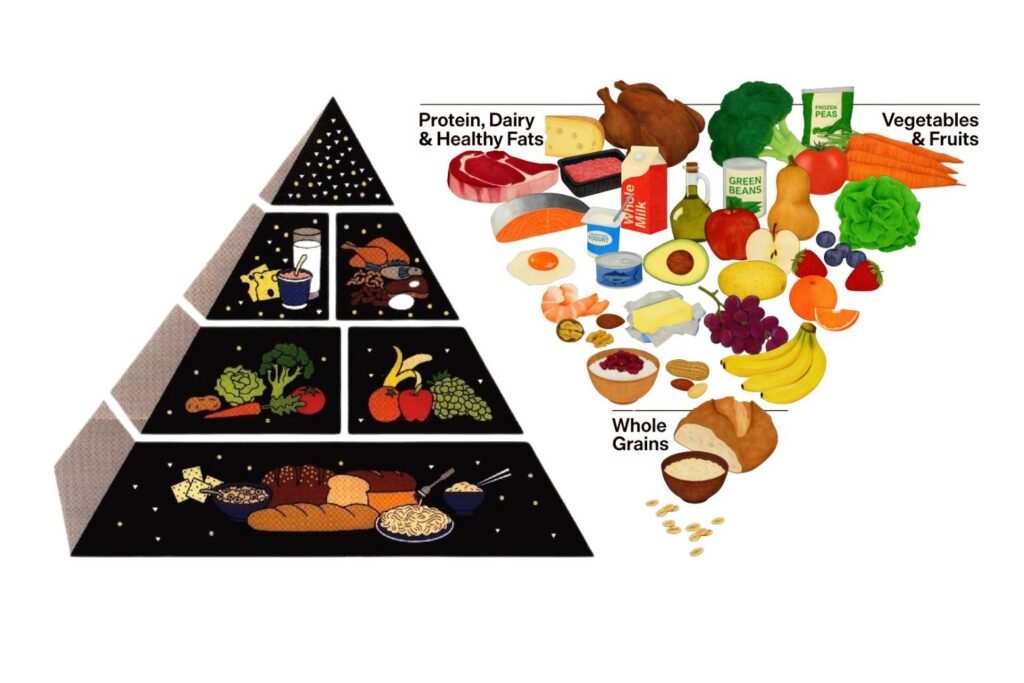
Every 5 years, the departments of Agriculture and Health and Human Services update the national dietary guidelines. Until recently, those guidelines generally recommended eating equal portions of fruit, vegetables, grains, and protein, with an optional, small portion of dairy. On January 7, 2026, the White House announced new dietary guidelines that invert the traditional food pyramid, placing red meat, seafood, poultry, and dairy products at the top.
Nutrition experts have had mixed responses, praising the recommendations to limit processed foods and refined grains, but also said that recommendations encouraging salt seasoning and increased meat consumption could “inadvertently lead consumers to exceed recommended limits for sodium and saturated fats.” Many have also raised concerns about conflict of interest, since authors who reviewed the guidelines have ties to several prominent meat and dairy groups.
Topics: Animal welfare, Climate change, Environment, Farms