
Blooming Fields Farm Continues a Legacy of Climate-Resilient Farming
Sheree Bishop, Communications Coordinator
October 30, 2026
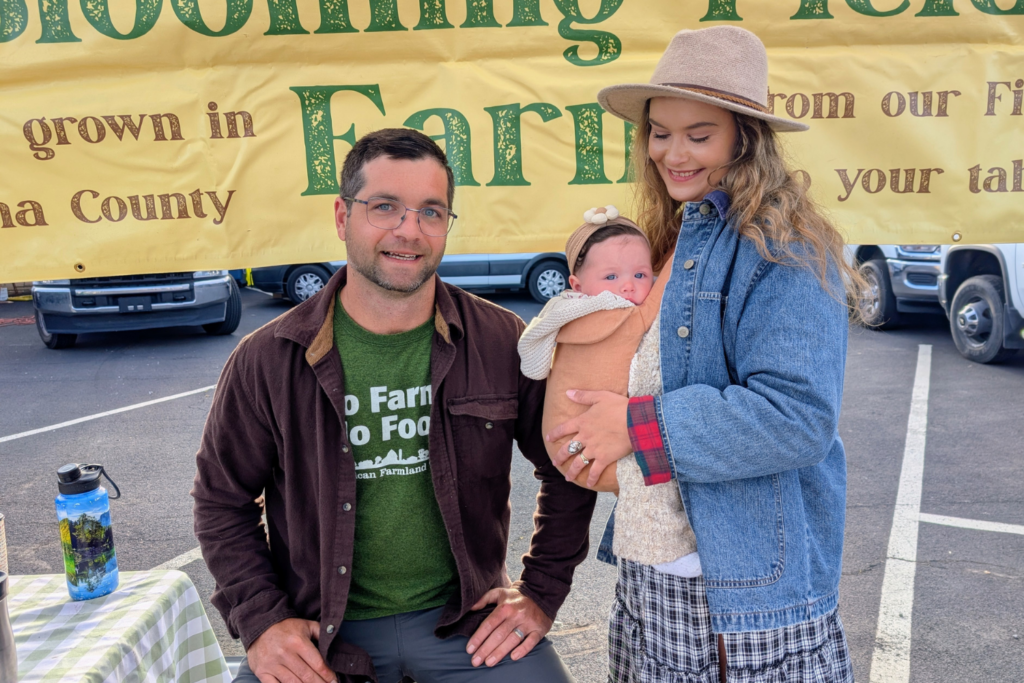
At Blooming Fields Farm, spouses Anthony and Caressa Giacobbe are the next generation of Sonoma County farmers specializing in dry-farming, an innovative, climate-friendly technique that works as an alternative to conventional irrigation. Together, with support from their community, they grow several varieties of potatoes, tomatoes, squash, and more, continuing a family legacy of providing delicious produce to popular restaurants and dedicated shoppers alike.
Starting from Square One
Caressa grew up helping her father, David Little of Little Farm, which was known for its wide variety of dry-farmed potatoes and other vegetables sold at the Ferry Plaza Farmers Market for 24 years.
Dry farming is a water-conserving, climate-resilient method that relies on rainfall and soil moisture, rather than conventional irrigation. It’s a technique that works well in California’s cool, foggy coastal regions, like Sonoma County, an area that is also prone to drought. Dry-farming creates a certain amount of stress in plants as their roots burrow deep for moisture, and as a result, produces smaller but more flavorful and nutrient-dense crops.
“[My father] fell in love with farming in this area because of all the great farms and agriculture, and he actually learned about dry farming out here. I grew up just loving being outside with my dad and being on the farm,” Caressa says.
When it came time to leave home and set out on her own, Caressa decided to step away from farming. At age 22, shortly after meeting Anthony, she returned to Little Farm to support her father. The more time passed, the more their responsibilities on the farm grew.
Anthony stumbled into farming himself. “I did not grow up in an agriculture family. I happened to marry the farmer’s daughter,” he says.
Eventually, they came to manage many aspects of farm operations with David, from harvesting to farmers markets. This helped the couple learn by doing, giving them a deep understanding of how a successful farm operates and how to dry-farm. After David retired and Little Farm closed in 2024, both Caressa and Anthony were left wondering what comes next.
“We took off some time and weren’t sure if it was something we were going to keep doing. Because farming is hard. It’s hard work,” Caressa recalls. “And then we just missed it so much. We love working together. We love being outside together. And we were like, ‘What do we see our future like?’ And so we decided to do it all ourselves, starting from square one.”
The Challenges of Growing a New Farm
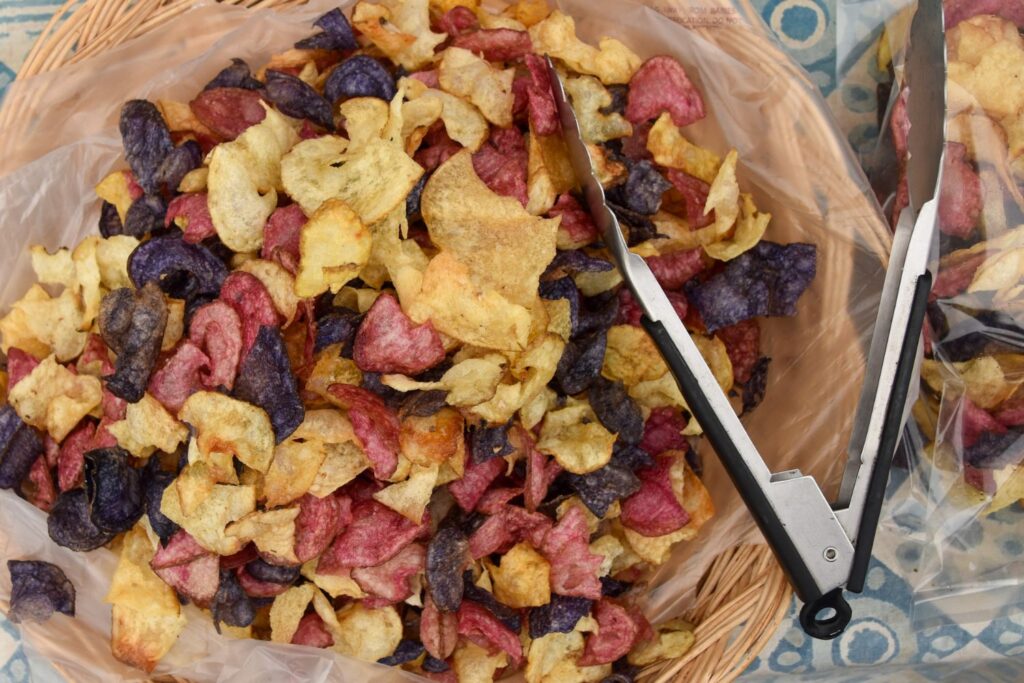
In 2025, Caressa and Anthony established Blooming Fields Farm on a plot of land they now own. There, they grow a collection of vegetables including squash, tomatoes, basil, beets, cabbages, peppers, and more. They are best known for their flavorful dry-farmed potatoes in several varieties, from classic Yukon Gold to marbled Masquerade. They also use some potatoes to make lightly salted, homemade potato chips.
When it came to deciding how to farm, dry farming was a no-brainer. “Dry farming and the sustainability behind dry farming was always a given. It was just the way we were taught,” Anthony says.
One of the biggest challenges to starting up their farm was getting the capital needed to do it. “Having to purchase this property and all the equipment and seeds, it’s a lot. If you don’t already have money to begin with, it’s very difficult to start a farm or any type of agriculture business,” Anthony says.
Thankfully, their community of friends and family, as well as the Bay Area chef community, supported and uplifted their new business.
“We were fortunate enough that, even though my dad retired, we still had all these connections that we had built with people over the years. We were able to reach out and say, ‘Hey, would you still buy from us?’ If we didn’t have those connections, it would be really difficult,” Caressa says.
“We’ve roped in just about everybody we know into helping in one way or another. Friends and family, our moms, our neighbors. And we give back to our community. We donate produce to our fellow neighbors here and there in exchange for helping us pick tomatoes or harvesting potatoes,” Anthony adds.
Coming Home and Returning to a Supportive Farmers Market Community
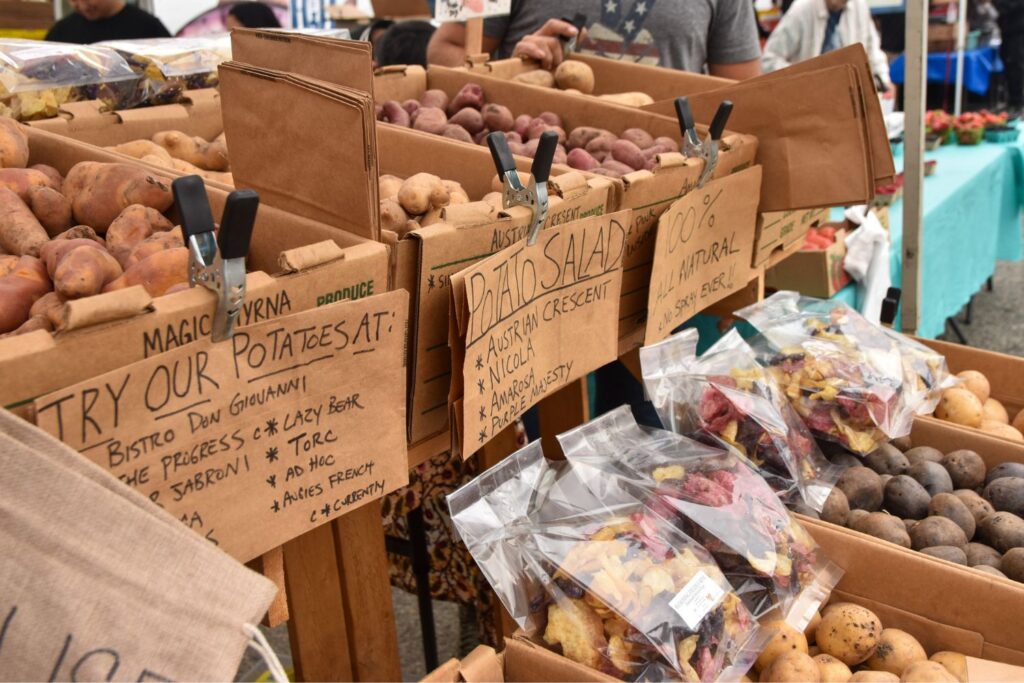
Since returning to the Ferry Plaza Farmers Market, Blooming Fields Farm has gotten a warm welcome from a community of shoppers excited to cook with locally grown potatoes. The farm is also at other farmers markets in San Rafael, and they have maintained many long-standing relationships with restaurants like Coqueta, The Progress, and Lazy Bear in San Francisco, as well as a few restaurants in Napa County.
“Coming back to the Ferry Plaza was really nice. It was kind of like coming home again, seeing all the same faces I’ve seen since I was 10 at the market with my dad, watching me grow up. Now coming with my daughter, it’s been a full-circle kind of moment for us,” Caressa says.
The couple shares their excitement to watch people grow to love their potatoes, chips, tomatoes, and other products.
“We might not have a lot of big, expensive things, but we’re rich in life through the lifestyle that we have and getting to spend so much time together, the three of us,” Caressa says.
Find Blooming Fields Farm at the Ferry Plaza Farmers Market on Saturdays.
Topics: Family, Farmers, Farmers market, Farms